



### The Meteoric Rise of Esports Prediction Markets
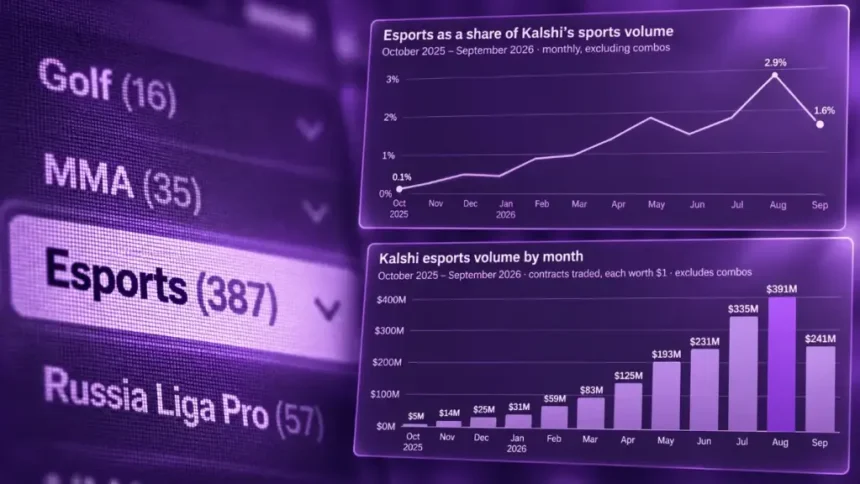
The landscape of digital asset trading has shifted dramatically, with esports emerging as a surprising powerhouse on prediction platforms. Data from Kalshi reveals a staggering trajectory: while monthly trading volume for esports contracts remained stagnant-never exceeding $0.4 million prior to October 2025-the sector experienced an explosive breakout. By August 2026, monthly volume surged to an unprecedented $391 million. Looking at the twelve-month window ending in September 2026, the total volume for esports-related contracts reached a massive $1.73 billion.
While these figures represent a specific niche within the broader financial ecosystem, they serve as a definitive rebuttal to critics who claim that esports engagement is waning. The data proves that the appetite for competitive gaming as a speculative asset is not only alive but thriving.
### 2026: The Definitive Era of Prediction Markets
If we were to categorize the current era of digital speculation using the cyclical nature of the Chinese Zodiac, 2026 would undoubtedly be the “Year of the Prediction Market.”
Historically, the industry has been defined by fleeting trends-from the speculative frenzy of NFTs and the volatility of early crypto to the rise of online poker, sweepstakes, and social casinos. Each of these sectors had its moment in the sun, often fueled by hype cycles that eventually leveled off. However, prediction markets are proving to have more structural staying power.
To put this into perspective, consider the shift in how users interact with events. Where traditional sports betting relies on fixed odds, prediction markets allow participants to trade on the probability of real-world outcomes, effectively turning news cycles and tournament results into liquid assets. If I were placing a bet on the next major trend for 2027, I would be backing the continued integration of high-frequency trading mechanics into mainstream entertainment.
### Why This Matters for the Gambling Sector
For stakeholders within the gambling and betting industry, this shift represents a fundamental change in consumer behavior. The transition from passive wagering to active, event-based trading suggests that the next generation of bettors is looking for more than just a payout-they are looking for a market-driven experience.