



# A New Era of Deep Space Exploration: The Roman Space Telescope Takes Flight
By Terrence O’Brien
Aug 30, 2026, 4:36 PM UTC
[Terrence O’Brien](http://www.theverge.com/authors/terrence-obrien) serves as the weekend editor for The Verge. With over 18 years of experience reporting on the technology sector, he brings a seasoned perspective to the evolving landscape of space innovation.
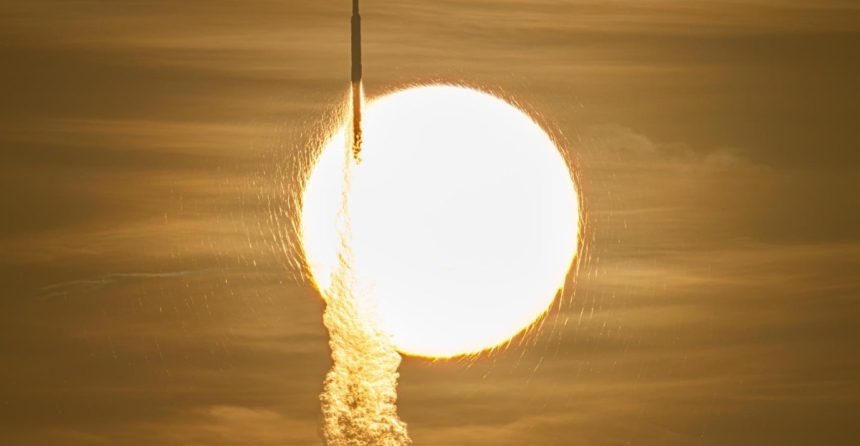
Following a turbulent history marked by [funding struggles](http://www.theverge.com/2018/6/5/17425388/nasa-james-webb-space-telescope-astrophysics-decadal-survey) and a significant rebranding effort, the [Nancy Grace Roman Space Telescope](https://science.nasa.gov/mission/roman-space-telescope/) has officially [successfully launched](https://www.nasa.gov/news-release/nasas-dark-universe-seeking-nancy-grace-roman-space-telescope-launches/). The observatory is currently embarking on a critical three-month transit, traveling one million miles to reach its final destination: the second Sun-Earth Lagrange point (L2), situated well past the Moon.
## Redefining Cosmic Mapping
Once operational at L2, the Roman Space Telescope is set to revolutionize our understanding of the cosmos through an [unprecedented survey of the universe](https://www.discovermagazine.com/the-nancy-grace-roman-space-telescope-will-now-travel-almost-one-million-miles-to-reveal-mysteries-of-the-universe-49555). While the Hubble Space Telescope has provided us with iconic imagery for decades, Roman is designed for sheer scale and efficiency.
Equipped with a sophisticated 300-megapixel infrared camera, the telescope boasts a field of view 100 times wider than that of its predecessor. This massive leap in capability allows it to map the heavens at a velocity 1,000 times faster than Hubble. To put this into perspective, if Hubble were tasked with creating a high-resolution mosaic of the entire sky, it would take centuries; Roman can accomplish similar wide-field objectives in a fraction of that time, effectively turning a marathon into a sprint.
## Peering Into Alien Worlds
Beyond its role as a cosmic cartographer, the Roman Space Telescope is a powerful tool for exoplanetary research. It features an advanced Coronagraph instrument, which acts like a high-tech sunshade. By precisely masking the blinding glare of host stars, the telescope can isolate the faint light reflected by orbiting planets.
This technology is a game-changer for astrobiology. It enables scientists to [directly image exoplanets](http://www.theverge.com/2021/11/4/22761537/space-telescope-astronomy-decadal-survey-astrophysics-habitable-planets) that were previously hidden in the shadows of their stars. Unlike earlier methods that relied on detecting a planet’s “wobble” or the dimming of a star, Roman can capture light from smaller, older, and cooler worlds, providing a clearer picture of the diverse planetary systems that populate our galaxy. As we look toward the future of space exploration, the Roman telescope stands as our most capable eye into the dark, mysterious corners of the universe.