




The Evolution of Chinese Automotive Design: From Imitation to Internal Rivalry
The pace of transformation within China’s automotive sector is nothing short of breathtaking. Only a few years ago, the industry was defined by a culture of blatant mimicry. Domestic manufacturers frequently borrowed the rugged silhouettes of Land Rovers, replicated the signature quad-headlight aesthetic of Mercedes-Benz, or grafted the rear profiles of Porsche Macans onto affordable, mass-market crossovers. At the time, this strategy was driven by a widespread consensus that Western design and engineering represented the absolute pinnacle of automotive excellence.
However, the landscape has shifted dramatically. China now hosts the most sophisticated and densely populated electric vehicle (EV) market in the world. According to recent data from the China Passenger Car Association (CPCA), domestic EV sales have surged, with local brands now capturing over 80% of the country’s new energy vehicle market share. This dominance has fundamentally altered the industry’s creative trajectory.
The Shift Toward Domestic Homogenization
While the era of copying Western luxury marques has largely faded, the impulse to replicate has not vanished-it has simply pivoted. Instead of looking toward Detroit, Munich, or Stuttgart for inspiration, Chinese automakers are now increasingly drawing from their own domestic peers. This internal feedback loop has created a unique design ecosystem where successful aesthetics are rapidly iterated upon and adopted across the board.
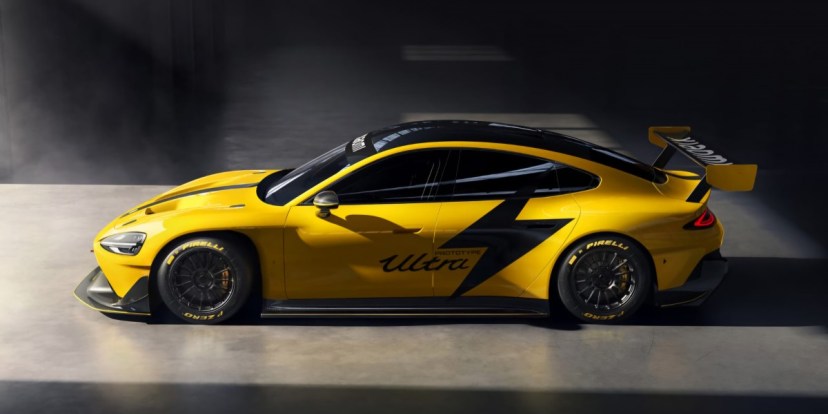
A prime example of this trend is the recently unveiled Luxeed RX. A casual observer might struggle to distinguish it from other high-profile domestic releases, as the design language mirrors the sleek, minimalist profiles that have become the industry standard for Chinese EVs. Much like how the smartphone market eventually converged on a singular “glass slab” form factor, the Chinese EV sector is witnessing a convergence of design, where aerodynamic efficiency and tech-forward styling take precedence over brand-specific heritage.
Why Design Convergence is Accelerating
This trend toward uniformity is not necessarily a lack of creativity, but rather a byproduct of intense market saturation. With dozens of startups and legacy manufacturers competing for the same tech-savvy consumer base, there is immense pressure to adopt “proven” design elements that signal modernity and high-tech capability. As these companies race to integrate advanced autonomous driving sensors and ultra-efficient battery architectures, the physical constraints of these technologies often dictate a similar visual outcome.
As the market continues to mature, the challenge for these brands will be to move beyond the “lookalike” phase and establish distinct identities that resonate with global consumers. For now, however, the industry remains locked in a cycle of rapid, iterative design that prioritizes speed-to-market and familiar, high-tech aesthetics.