



Rethinking Steel Decarbonization: Why Helix Carbon is Targeting the Blast Furnace
The global steel and iron sectors remain some of the most significant contributors to industrial greenhouse gas emissions. While a wave of emerging startups has attempted to tackle this environmental crisis by inventing entirely new production methods, Helix Carbon argues that these efforts are fundamentally misguided. According to the company, the industry’s focus has been misplaced.
The Blast Furnace Dilemma
David Brown, the CEO and co-founder of Helix Carbon, suggests that any strategy aimed at decarbonizing steel production that ignores the traditional blast furnace is destined to fail. “Any attempt to decarbonize the steel industry without dealing with the blast furnace is not going to work,” Brown noted in a recent discussion. Rather than attempting to render these massive, centuries-old structures obsolete, Helix Carbon is focused on retrofitting them to operate more cleanly.
This strategy is particularly compelling because it addresses the core of the production process. By cleaning up existing infrastructure, Helix Carbon aims to significantly reduce the carbon footprint of steel manufacturing while simultaneously improving the financial performance of iron producers-a rare alignment of environmental sustainability and corporate profitability.
The Chemistry of Traditional Iron Production
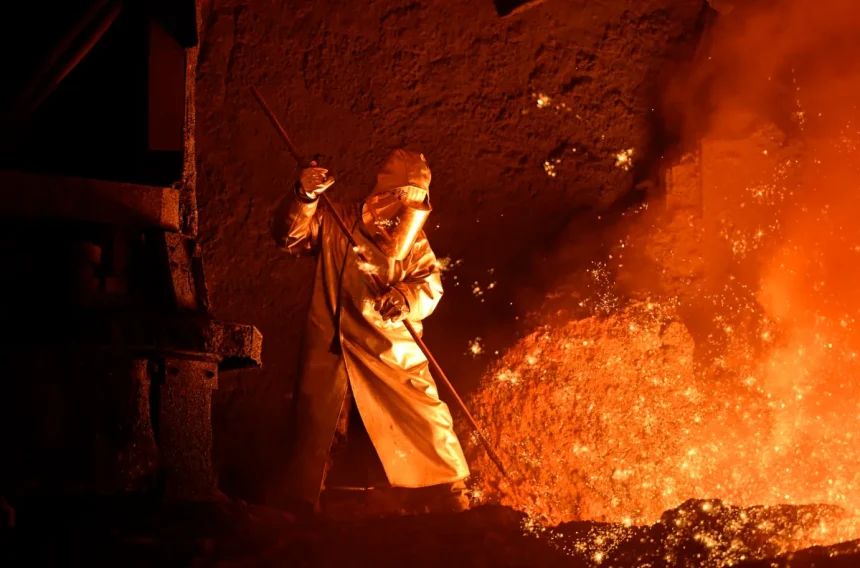
For hundreds of years, the blast furnace has served as the backbone of iron production. The process relies on coke-a refined coal product-to facilitate the transformation of raw iron ore into metallic iron. In this chemical reaction, the iron is essentially “locked” with oxygen atoms. The burning coke serves a dual purpose: it generates the intense heat required for the reaction and produces carbon monoxide, which acts as the primary agent to strip oxygen away from the iron ore.
The environmental cost of this traditional method is staggering. Because the process relies heavily on carbon-based fuels, it generates massive volumes of carbon dioxide as a byproduct. With the steel industry currently accounting for approximately 7% to 9% of global anthropogenic CO2 emissions, the need for a practical, scalable solution is more urgent than ever. Helix Carbon’s approach seeks to intercept this pollution at the source, turning a liability into a functional component of the production cycle.