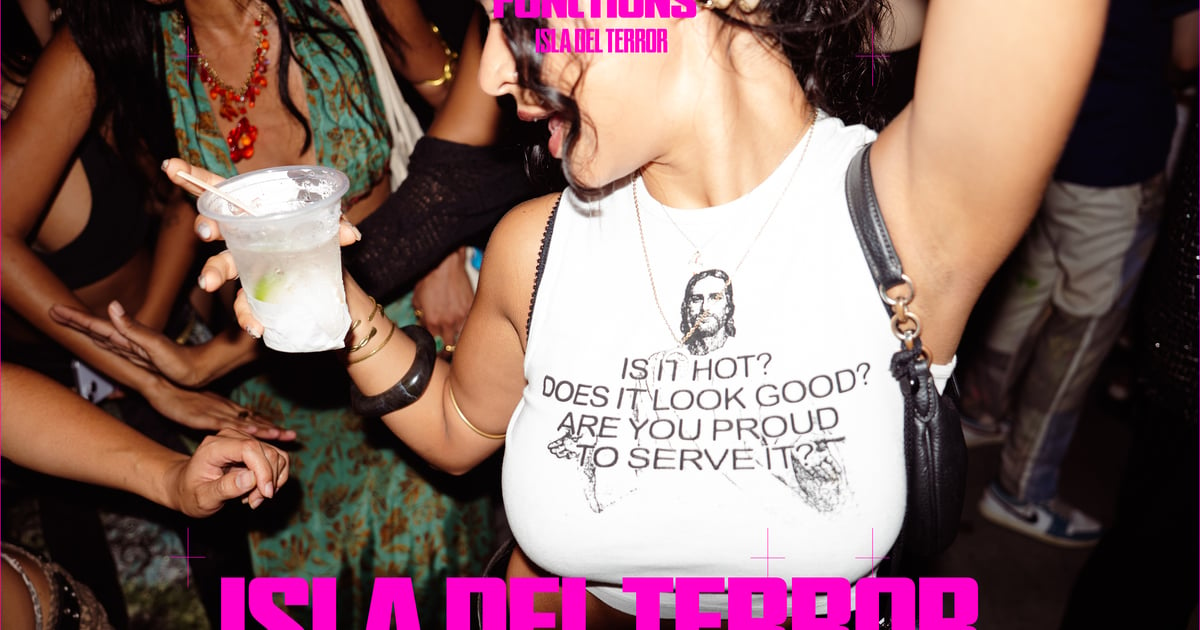



While reggaeton artists dominate concert stadiums globally, the genre’s birthplace withstands red tape and bureaucracy. Mithun Sundaresan speaks to the founder of San Juan club night ISLA DEL TERROR about cutting that tape, and creating a space for the “punks, queer people, ballroom dancers and kids from the projects” in Puerto Rican youth culture
- Words: Mithun Sundaresan | Photos: Coral Silva, Adriana Corbert, Nicole Bordali, Paula Candelaria & Coral del Mar
- 24 November 2026
Reggaeton, and the dembow rhythms at its core, sits at the heart of much of today’s Latin and Caribbean-hailing club music. It’s in San Juan, Puerto Rico’s capital, where the genre took shape before becoming a global sensation, emerging from a lively underground culture in the ’90s with artists drawing on influences from hip hop, Panamanian dancehall and reggae en Español. That culture was built around iconic cassette collectives like The Noise, as well as the legendary nightclub of the same name which was credited with birthing reggaeton, and DJ Playero’s series of numbered mixtapes.
Reggaeton has grown from an underground movement into a global phenomenon filling stadiums in the years since then,