





# Beyond Aesthetics: How Conductive Hair Dyes Are Revolutionizing Brain-Computer Interfaces
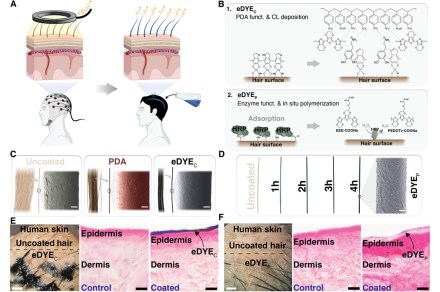
For decades, our hair has been viewed primarily as a stylistic asset. However, a groundbreaking innovation is shifting that perspective, turning every strand on your head into a potential conduit for neural data. A collaborative team from Linköping University and Ghent University has pioneered “eHAIR,” a specialized conductive dye that converts human hair into functional bioelectronic sensors.
The findings, recently detailed in Science Advances, suggest a future where monitoring neurological health is as simple as visiting a salon.
## The Challenge of Traditional EEG Monitoring
Standard electroencephalography (EEG) is the gold standard for tracking brain activity, but it faces a significant physical barrier: hair. Because hair acts as an insulator, it prevents the necessary contact between the scalp and the sensor.
To bypass this, medical professionals typically apply thick, conductive pastes or gels. While effective, this method is far from ideal. It is notoriously messy, uncomfortable for the patient, and prone to signal degradation as the gel dries out over time. In clinical settings, this often limits the duration of monitoring sessions and complicates the patient experience.
## eHAIR: Turning Obstacles into Interfaces
Instead of fighting against the presence of hair, the researchers developed a method to utilize it. By applying a mixed ionic-electronic conductive polymer dye, the team effectively coats the keratinized filaments of the hair, transforming them into flexible, low-impedance electrodes.
Think of this process like upgrading a standard copper wire to a high-speed fiber optic cable; the hair remains physically the same, but its functional capacity is entirely redefined.
### Proven Performance and Future Potential
The efficacy of this technology has already been demonstrated through rigorous experiments. In laboratory trials involving rats, the eHAIR-coated strands successfully acted as a stable interface for recording neural signals. Remarkably, the system was robust enough to support complex electronic components, such as organic electrochemical transistors, without the need for any traditional conductive gels.
This development could pave the way for long-term, non-invasive brain monitoring that is far more comfortable and reliable than current options. By integrating bioelectronics directly into our natural features, we are moving toward a future where wearable technology is not just worn-it is integrated into our very biology.