




Beyond Software: Why Hardware is the New Frontier for Deep Work
In an era defined by constant connectivity, the market is saturated with focus and productivity apps designed to shield us from the relentless barrage of digital interruptions. Whether it’s the siren call of social media notifications or the ambient noise of a bustling open-plan office, we are constantly fighting for our attention. While digital well-being tools-such as app blockers or notification silencers-are helpful, they suffer from a fundamental flaw: they are far too easy to disable the moment your willpower wanes.
The Limitations of Digital-Only Solutions
Most software-based focus tools rely on the user’s own discipline to remain effective. If you find yourself mindlessly scrolling through TikTok or Instagram, a simple toggle in your settings can bypass any restriction you’ve set. True deep work, however, requires a physical barrier-a tangible reminder that your time is currently reserved for high-value tasks.
Introducing the Busy Bar: A Physical Boundary
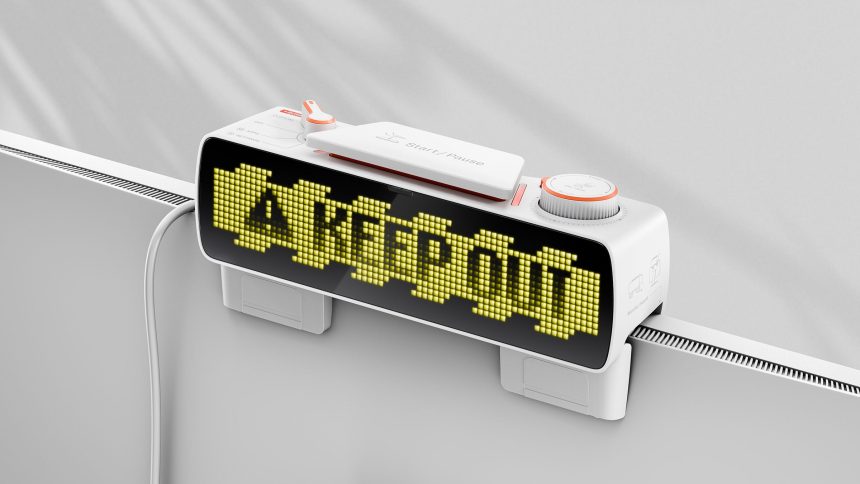
This is where the Busy Bar from Flipper Devices changes the game. Moving away from the ephemeral nature of software, this hardware-based solution acts as both a functional desk clock and a high-visibility status indicator.
The device features a sleek LED screen and a prominent, tactile button. With a single press, the display shifts to a bold, unmistakable red “BUSY” sign. It serves as a non-verbal, firm communication tool for colleagues or family members, signaling that you are currently in a flow state. While the default setting is professional, the device allows for customization, enabling users to display personalized messages-ranging from “In a Meeting” to more humorous, blunt warnings like “Deep Work in Progress.”
Why Hardware Beats Software for Focus
The psychological impact of a physical object on a desk cannot be overstated. According to recent workplace productivity studies, interruptions can cost employees up to 23 minutes of focus time to fully recover from. By utilizing a physical signal, you aren’t just blocking digital noise; you are managing the social expectations of your environment.
Callum Tennent, a creative writer at Flipper, highlights the philosophy behind the design: “How do you let people know politely, yet firmly, that you don’t want to be disturbed? We decided the politest way to do it was a massive red light on your desk.”
Is the Investment Worth It?
The Busy Bar, which launches today at a price point of $249, positions itself as a premium tool for professionals who take their concentration seriously. While the price tag is significant, it represents an investment in the most valuable asset a modern worker has: their focus.
By bridging the gap between office etiquette and personal productivity, Flipper Devices is betting that the future of deep work isn’t just about better software-it’s about creating a physical environment that respects your time. For those struggling to maintain boundaries in a hybrid or open-office world, this hardware might just be the missing piece of the puzzle.
Beyond Hacking: Flipper’s Pivot to Productivity with the Busy Bar
The team behind the Flipper Zero-the $200 multi-tool that gained viral fame on TikTok for its Tamagotchi-inspired interface and its ability to interact with wireless signals-is shifting gears. While the Flipper Zero became a lightning rod for controversy, sparking security debates over its potential to bypass RFID locks and assist in vehicle theft, the company is now exploring a different path.
The Flipper Zero’s reputation was so polarizing that it faced significant regulatory scrutiny. In 2024, Canadian officials moved to restrict the device as part of a broader initiative to curb rising auto theft rates. Similarly, in 2023, U.S. Customs and Border Protection intercepted a shipment of 15,000 units, though they were eventually cleared for entry. Despite these hurdles, the company continues to push hardware boundaries, with the upcoming “Flipper One” promising even more sophisticated technical capabilities.
A New Direction: The Busy Bar
In a stark departure from their hacking-centric roots, the company has introduced the Busy Bar. This device is designed to integrate with the Busy app, positioning itself as a dedicated productivity and focus companion.
It is important to note that the Busy Bar is entirely distinct from the company’s security-focused hardware. As the team clarifies, while the Busy Bar is manufactured by the same group, it lacks any hacking functionality or technical overlap with the Flipper Zero. They are, for all intents and purposes, entirely separate product lines.
Hardware as a Focus Catalyst
At its core, the Busy Bar functions as a high-end, physical “On Air” status light. While modern smartphones already include “Do Not Disturb” modes and notification filters, Flipper argues that software-based solutions are inherently flawed.
The philosophy behind the Busy Bar mirrors that of the Brick, a hardware device that physically restricts app access. The core argument is that relying on a smartphone to manage smartphone addiction is a losing battle. By introducing a physical, tactile interface, the Busy Bar aims to break the cycle of digital dependency.
The Psychology of the Physical Switch
The primary issue with software-based focus tools is the “trigger” effect. As the team notes, the irony of using a phone to disable phone notifications is that the very act of picking up the device often leads to immediate distraction. You might intend to turn on “Focus Mode,” only to be sidetracked by a notification that pops up the moment you unlock the screen.
The Busy Bar addresses this by moving the control away from the screen. It features:
* Manual Toggle Switches: A physical way to swap between work and rest modes without touching a screen.
* Tactile Dials: A dedicated interface for setting specific focus intervals, such as Pomodoro-style work blocks.
By providing a tangible, dedicated piece of hardware, the Busy Bar attempts to create a psychological barrier between the user and their digital distractions, proving that sometimes the best way to manage technology is to step away from the screen entirely.
Mastering Deep Work: A Closer Look at the Flipper Busy Bar
In an era where constant notifications and digital interruptions are the norm, maintaining deep focus is a significant challenge. The Busy Bar, a hardware solution from Flipper Devices, aims to solve this by providing a physical interface to manage your availability. At its core, the device features a prominent button that toggles your status, allowing you to signal your focus state to those around you. Beyond simple status updates, the bar is designed to facilitate the Pomodoro technique, enabling users to automate structured work intervals followed by restorative breaks.
Smart Home Integration and Versatility
The Busy Bar is built with Matter-certified technology, ensuring it plays nicely with the broader smart home ecosystem. This interoperability allows for sophisticated automation; for example, you could configure your smart home to dim the living room lights or shift your office smart bulbs to a specific hue-like a deep amber-the moment you activate your “do not disturb” mode.
While the device offers a companion app for advanced configuration, it is not strictly necessary for operation. Users who prefer a more analog or privacy-focused approach can utilize the bar offline or connect it directly to a computer via cable, bypassing wireless requirements entirely.
Automated Presence and Remote Control
One of the most practical features of the Busy Bar is its ability to sync with your digital workflow. If you are frequently on Zoom calls or recording audio, the device can be set to detect microphone activity, automatically signaling your “busy” status without requiring manual input.
For those who prefer a cleaner desk, the unit supports Wi-Fi connectivity, allowing you to mount it on a door frame or a wall rather than keeping it tethered to your workspace. While the primary LED display faces outward to alert others, a secondary monochrome screen on the rear ensures you can keep track of your remaining focus time at a glance.
Design Philosophy: Beyond the Surface
While some critics have labeled the device as “over-engineered,” the team at Flipper argues that its true value lies in its adaptability. According to Flipper representative Tennent, the device’s utility becomes apparent only after users explore its full range of programmable features, which extend far beyond its initial design as a simple status display.
The project originated from founder Pavel Zhovner’s personal need for a more effective way to signal his availability in a busy office environment. Emphasizing longevity and user agency, Flipper has made the Busy Bar an open-source project. This commitment to repairability is evidenced by an official disassembly guide on iFixit, ensuring that users can maintain or modify their hardware as needed.
Security and the Maker Community
Flipper Devices acknowledges that their products often attract the attention of the “hacker” community. Rather than resisting this, they have embraced it. Aleksandr Semin, a marketing specialist at Flipper, notes that the company proactively prioritizes system security and reliability, anticipating that users will inevitably look for ways to customize and push the boundaries of the hardware. By building a robust, open, and secure platform, Flipper ensures that the Busy Bar remains a reliable tool for professionals looking to reclaim their time in an increasingly distracted world.