



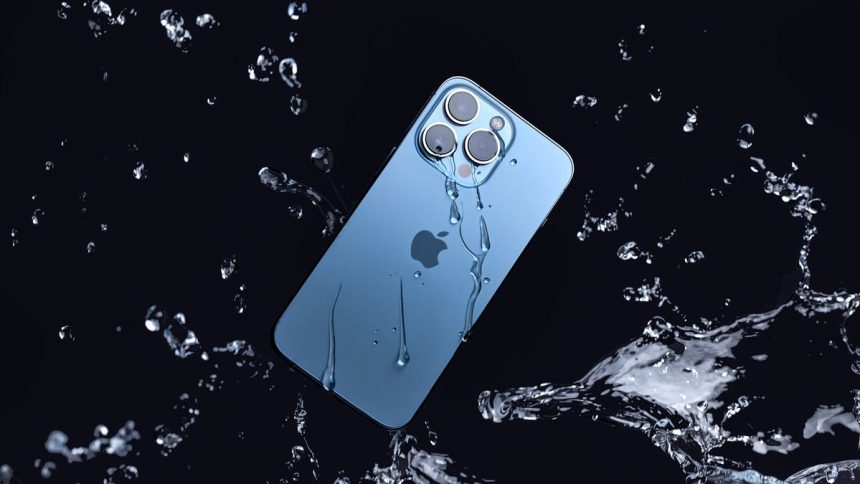

Is Your Smartphone Truly Waterproof? Understanding IP Ratings and Real-World Risks
We have all experienced that heart-stopping moment: a glass of water tips over, or your device slips from your hand toward a puddle. For owners of modern flagships like the iPhone 17 Pro, Galaxy S26 Ultra, or Pixel 10 Pro, this is often a minor inconvenience rather than a financial catastrophe. Thanks to advanced engineering, today’s best phones are designed to shrug off accidental splashes, rain, and even brief, shallow submersions.
However, there is a dangerous misconception that “water-resistant” is synonymous with “waterproof.” Relying on these marketing terms without understanding the technical limitations can lead to a dead device and a costly trip to the store for a replacement.
Decoding the Alphabet Soup: What IP Ratings Actually Tell You
When you browse technical specifications, you will frequently encounter codes like IP67, IP68, or IPX8. These are Ingress Protection (IP) ratings, a global standard established by the International Electrotechnical Commission (IEC). They serve as a standardized metric to define how well a device’s chassis keeps out environmental hazards.
The code is broken down into two distinct digits:
* The First Digit (Solids): This measures resistance to dust, sand, and debris, ranging from 0 to 6. A rating of 6 indicates the device is “dust-tight,” meaning no particles can enter the internal components.
* The Second Digit (Liquids): This measures moisture protection, ranging from 0 to 8. An 8 rating is the current gold standard for consumer smartphones, implying the device can withstand submersion in fresh water beyond one meter for a specified duration (usually 30 minutes).
The “Fresh Water” Myth: Why Pools and Oceans Are Different
It is vital to understand that these laboratory tests are conducted in controlled, static environments using fresh water. Real-world scenarios are significantly more aggressive:
- Chlorine and Salt: Swimming pools are treated with harsh chemicals like chlorine, while the ocean is filled with salt. Both substances are corrosive and can degrade the rubber seals (gaskets) that keep your phone watertight over time.
- Pressure and Movement: An IP rating does not account for water pressure. Diving into a pool or letting a wave hit your phone creates a force that can easily push liquid past the seals, even if the depth is technically within the phone’s limits.
- Seal Degradation: Waterproofing is not permanent. As your phone ages, or if it has suffered even minor drops, the internal adhesive and seals can weaken. A phone that survived a sink drop last year might fail in a shallow puddle today.
Best Practices for Liquid Safety
If you want to keep your device functioning for years, treat your IP rating as a safety net, not a feature to be tested.
* Avoid the Beach and Pool: Unless you are using a dedicated, certified waterproof pouch or housing, keep your phone away from the water’s edge. Saltwater, in particular, can cause rapid internal corrosion that is often irreversible.
* Rinse with Care: If you accidentally drop your phone in a sugary drink or saltwater, gently rinse it with a tiny amount of fresh water and pat it dry immediately. Never use a hairdryer or compressed air, as the heat or pressure can damage the seals.
* Check for Damage: If your screen is cracked or the frame is bent, your phone’s water resistance is likely compromised. In these cases, treat the device as if it has no protection at all.
Ultimately, while your smartphone is more resilient than ever, it is not an underwater camera. By respecting the limits of your device’s IP rating, you can avoid the frustration of water damage and ensure
Decoding IP Ratings: What Your Device’s Water Resistance Actually Means

An IPX4 rating on devices like earbuds provides sufficient protection against sweat during intense exercise.
When shopping for modern electronics, you’ve likely encountered the “IP” rating-a technical specification that often feels more confusing than helpful. Understanding these codes is essential for knowing how much abuse your gadgets can actually handle. Whether it’s a pair of workout earbuds or a flagship smartphone, these ratings serve as a guide to durability, but they aren’t always as straightforward as they seem.
The Mystery of the “X” in IP Ratings
You may occasionally spot a rating where a digit is replaced by an “X,” such as IPX8. This isn’t a typo; it indicates that the manufacturer has not submitted the device for formal testing in that specific category. For instance, an IPX8-rated gadget is certified for water submersion, but because it lacks a dust-resistance test, the first digit is swapped for an X. It doesn’t necessarily mean the device is vulnerable to dust, but it does mean there is no official guarantee regarding its performance against solid particles.
Why “IP68” Isn’t a Universal Standard
It is a common misconception that all IP68-rated devices offer identical protection. Take the iPhone 17 Pro and the Samsung Galaxy S26 Ultra; both carry an IP68 rating, yet their real-world capabilities differ significantly.
The International Electrotechnical Commission (IEC) sets the baseline for an “8” rating: the device must survive submersion in at least 1 meter of water for 30 minutes. However, manufacturers are free to exceed these minimums. While the S26 Ultra is tested for depths up to 1.5 meters, Apple claims the iPhone 17 Pro can withstand depths of up to 6 meters for the same duration. Always check the manufacturer’s fine print, as the “IP68” label only confirms that the device meets the minimum threshold, not that it shares the exact same limits as its competitors.

High-end smartphones like the iPhone 12 Pro Max are engineered to withstand significant water pressure, but this protection is not permanent.
The Reality of Swimming and Water Exposure
Just because your phone boasts a high water-resistance rating doesn’t mean it’s designed for aquatic activities. Here is why you should keep your device dry:
- Static vs. Dynamic Pressure: IP tests are conducted in laboratory settings with perfectly still water. Moving your phone through water-like swimming or diving-creates dynamic pressure that can force liquid past the seals, leading to internal failure.
- Chemical Composition: These tests use pure, fresh water. Swimming pools contain chlorine, and the ocean contains salt, both of which can corrode charging ports and degrade the integrity of the device’s seals over time.
- Wear and Tear: IP ratings are based on brand-new hardware. As your phone ages, the adhesive seals around buttons and ports naturally degrade, meaning a phone that was waterproof a year ago may be significantly more vulnerable today.
Treat IP Ratings as a Safety Net, Not a Feature
Think of water resistance as an insurance policy for accidents rather than a feature for underwater photography.
Understanding Smartphone Water Resistance: Beyond the IP Rating
Many smartphone users operate under the dangerous misconception that their device is invincible simply because it carries an IP rating. However, the reality is far more nuanced. Even if your phone is marketed as water-resistant, liquid damage is rarely covered by standard manufacturer warranties. If your device takes a swim, you are likely on your own.
Why Some Phones Lack Official IP Certification
You might notice that budget-friendly devices, such as the OnePlus Nord 2, often lack an official Ingress Protection (IP) rating. This omission isn’t necessarily a sign of poor build quality; rather, it is a strategic financial decision. Obtaining an official IP certification requires rigorous, standardized testing that is both time-consuming and expensive. For manufacturers focusing on affordability, skipping these tests helps keep the retail price competitive.
If your device lacks an IP rating, it is safest to treat it as if it has zero liquid protection. While some manufacturers apply internal rubber gaskets or hydrophobic nano-coatings to provide a baseline level of defense, these are not substitutes for certified engineering. You might survive a light drizzle while taking a call, but full submersion will almost certainly result in catastrophic hardware failure.
Decoding the IP Rating System
The IP code is a two-digit standard defined by the International Electrotechnical Commission (IEC). The first digit measures protection against solid particles (like dust), while the second digit indicates the level of moisture resistance. Understanding these tiers is essential for managing your expectations.
Solid Particle Resistance (First Digit)
This scale ranges from 0 (no protection) to 6 (dust-tight). Most modern smartphones aim for a 6, ensuring that fine debris cannot penetrate the chassis and damage internal components.
| IP First Digit | Protection Level |
|---|---|
| 0 | No protection |
| 1-4 | Protection against objects ranging from hands to small wires |
| 5 | Limited dust ingress (non-harmful) |
| 6 | Complete dust-tight protection |
Liquid Ingress Protection (Second Digit)
The second digit is where most consumers get confused. A rating of 7 or 8 is common in flagship devices, but these tests are conducted in controlled laboratory environments using fresh, still water. They do not account for the high-pressure jets of a shower, the salt content of ocean water, or the chemicals found in swimming pools, all of which can degrade seals much faster than pure water.
| IP Second Digit | Real-World Capability |
|---|---|
| 1-2 | Light vertical dripping |
| 3-4 | Sprays and splashes from various angles |
| 5-6 | Low-to-high pressure water jets |
| 7 | Immersion up to 1 meter for 30 minutes |
| 8 | Extended immersion (depth specified by manufacturer) |
The Reality of “Water-Resistant” Marketing
It is vital to remember that “water-resistant” is not synonymous with “waterproof.” According to recent industry data, liquid damage remains one of the top three reasons for smartphone insurance claims, despite the prevalence of IP68-rated devices.
Think of your phone’s water resistance like a raincoat: it will keep you dry
Understanding IPX Water Resistance Ratings: A Practical Guide
When shopping for electronics, you have likely encountered the “IP” rating system. These codes are not just random numbers; they are standardized benchmarks that define how well a device can withstand environmental hazards like moisture and dust. If you are trying to determine if your smartphone or gadget can survive a spill or a dip in the pool, understanding these specific water-resistance levels is essential.
The Ingress Protection (IP) scale is governed by international standards. While the first digit typically refers to dust resistance, the second digit-the focus of this guide-specifically measures how well a device handles liquid exposure.
Breaking Down High-Level Water Resistance (IPX6 to IPX8)
As the numbers increase, so does the intensity of the protection. Here is a breakdown of what these ratings actually mean for your daily life and the specific conditions they are designed to withstand.
IPX6: Defending Against Powerful Jets
A device rated at IPX6 is built to endure more than just a light drizzle. It is tested against powerful water jets projected from a 12.5mm nozzle.
* The Test: The device must withstand water pressure from any angle for three minutes at a distance of three meters.
* Real-World Application: This level of protection is suitable for outdoor environments where heavy rain or rough sea spray might occur. It is also robust enough to handle direct contact with high-pressure kitchen or bathroom faucets.
IPX7: The Standard for Accidental Submersion
Many modern flagship smartphones carry an IPX7 rating. This is the “safety net” for those who are prone to dropping their devices in the sink or a shallow puddle.
* The Test: The hardware is submerged in water up to one meter (approximately 3.3 feet) deep for a duration of 30 minutes.
* Real-World Application: This rating provides peace of mind against accidental spills, rain, and brief, shallow submersion. However, it is not intended for prolonged underwater use or high-pressure environments.
IPX8: Advanced Deep-Water Protection
For devices that need to go beyond the standard one-meter limit, manufacturers seek an IPX8 rating.
* The Test: The device is tested for immersion in depths exceeding one meter. Because the specific depth can vary, the manufacturer is required to explicitly state the maximum depth and duration the device can handle.
* Real-World Application: This is the gold standard for water resistance. It covers all the scenarios of IPX7 but offers a higher threshold for depth, making it ideal for specialized equipment or high-end devices designed for more rigorous environmental exposure.
Why These Ratings Matter
It is important to remember that these tests are conducted under controlled laboratory conditions using fresh water. Factors like salt water, chlorine in swimming pools, or high-temperature liquids (like hot coffee) can degrade seals and internal components much faster than the standard test conditions suggest.
Always check the manufacturer’s documentation for your specific device. While an IPX7 rating is excellent for accidental drops, it does not necessarily mean your phone is designed for underwater photography or extended swimming sessions. By understanding these ratings, you can better protect your investment and ensure your technology stays functional, regardless of the weather or the occasional mishap.