

Personalizing Your Digital Assistant: Apple’s New Siri Voice Customization
For years, interacting with Siri felt like speaking to a standardized, one-dimensional digital entity. However, following the announcements at WWDC 2026, Apple is finally dismantling the “one-size-fits-all” approach to voice assistants. With the rollout of the third developer beta for iOS 27, users have gained the ability to move beyond static presets and truly tailor Siri’s vocal delivery to match their personal preferences.
Fine-Tuning Your Experience: Pace and Expressivity
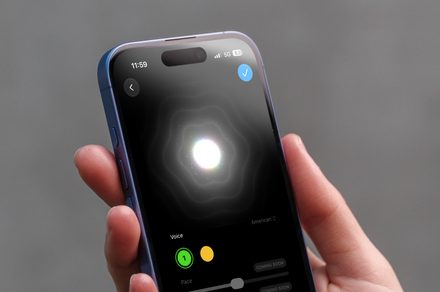
The latest update introduces two primary levers for voice modification: Pace and Expressivity.
* Pace: This control allows you to dictate the speed of Siri’s speech. Whether you prefer a rapid-fire delivery to save time or a slower, more deliberate cadence for clarity, the choice is now yours.
* Expressivity: This slider is the real game-changer. It modifies the intonation and emotional inflection of the AI. By shifting this, you can move Siri away from a robotic, monotone output toward a more natural, conversational tone that feels less like a machine and more like a helpful companion.
According to recent industry data, user engagement with voice assistants increases by nearly 30% when the interface feels more “human-like” and relatable. By allowing these granular adjustments, Apple is clearly aiming to bridge the gap between cold utility and genuine interaction.
How to Configure Your Custom Siri
To begin customizing your assistant, navigate to Settings > Siri > Expressive Voice Preview. Within this menu, you will find five distinct levels of adjustment for both sliders, applicable to all of Apple’s current voice profiles.
The implementation is remarkably user-friendly. Apple has integrated a real-time audio preview feature: as you slide the controls, Siri immediately speaks a sample phrase, allowing you to hear the changes instantly. This eliminates the guesswork of “set and forget” configurations. Once you have dialed in the perfect balance of speed and personality, simply tap the checkmark in the upper-right corner to save your profile.
A Unified Voice Across the Ecosystem
One of the most significant aspects of this update is its reach. These settings are not siloed within the Siri interface; once you define your preferred voice profile, those characteristics carry over across the entire iOS ecosystem. Whether you are using Siri to dictate a message, reading back a long-form article in Safari, or interacting with third-party apps that utilize Apple’s voice synthesis APIs, your custom “vibe” remains consistent.
Think of it like setting a system-wide font or theme; once you’ve established your preference, the digital environment adapts to you, rather than forcing you to adapt to a rigid, pre-programmed default. This level of personalization marks a major step forward in making AI feel like a natural extension of the user’s own digital identity.
Caviar’s Vision: Imagining the Foldable iPhone Ultra Before Apple Does
While the tech world remains in a state of perpetual speculation regarding Apple’s entry into the foldable smartphone market, the luxury customization brand Caviar has decided not to wait. The company has unveiled a conceptual “iPhone Ultra” collection, reimagining what a foldable Apple device might look like through a lens of extreme opulence.
Redefining Smartphone Aesthetics with Premium Materials
Caviar’s latest design study moves away from the standard glass and aluminum chassis typical of modern smartphones. Instead, the concept showcases a device wrapped in high-end materials, including premium leather and lightweight carbon fiber. By integrating these textures, Caviar is attempting to position the hypothetical foldable iPhone as a piece of high-fashion hardware rather than just a consumer electronic device.
This isn’t the first time the brand has pushed the boundaries of smartphone design. Caviar has built a reputation for creating ultra-exclusive, high-priced accessories that often border on the eccentric. For instance, the company recently garnered attention for a magnetic iPhone 17 Pro Max case that featured an authentic fragment of a Tyrannosaurus rex fossil, priced at a staggering $4,490.
The “Pre-emptive” Luxury Strategy
The most striking aspect of this release is its timing. By launching a luxury concept months-or perhaps years-before Apple is expected to debut its own foldable technology, Caviar is effectively creating a market for a product that does not yet exist.
This strategy highlights a growing trend in the luxury tech sector: the desire to own the “first” version of a device, even if that version is a third-party modification. While industry analysts suggest that Apple is currently prioritizing the refinement of hinge durability and screen crease reduction, Caviar is focusing entirely on the aesthetic “wow factor.”
Why Customization Matters in the Foldable Era
As foldable phones become more common, the market is seeing a shift toward personalization. According to recent industry reports, the global luxury smartphone market is projected to grow significantly as consumers seek to differentiate their devices from mass-produced models.
Caviar’s “iPhone Ultra” collection serves as a bold, albeit expensive, answer to this demand. By applying a bespoke makeover to a device that hasn’t even hit the assembly line, the company is betting that there is a niche audience willing to pay a premium for exclusivity. Whether or not Apple’s eventual foldable device will mirror these design choices remains to be seen, but for now, Caviar is setting a high-and incredibly expensive-bar for what a luxury foldable could represent.