




The Hisense A10: Bridging the Gap Between E-Ink and Modern Android Performance
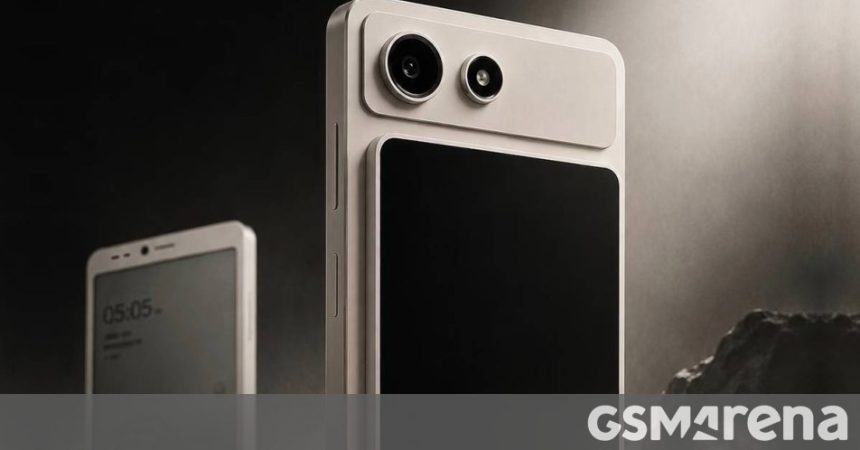
For years, the mobile industry has struggled to reconcile the eye-friendly benefits of E-Ink displays with the high-speed demands of the Android operating system. While E-Ink technology is unparalleled for long-form reading and battery efficiency, its inherent latency makes standard smartphone tasks-like scrolling through social media or navigating maps-a frustrating experience. While display manufacturers are steadily improving refresh rates, they have yet to reach the fluid performance levels of traditional OLED or LCD panels. Hisense, however, has pivoted toward a clever hardware-based workaround with its latest innovation: the Hisense A10.
A Modular Approach to Display Technology
The core concept behind the Hisense A10 is modularity. The device features a primary 6.13-inch E-Ink screen on the front, providing a paper-like experience for text-heavy applications. To solve the refresh rate dilemma, Hisense has engineered a secondary, detachable LCD panel that attaches magnetically to the rear of the chassis. This allows users to switch between a distraction-free, low-power reading mode and a high-performance, full-color interface for media consumption or gaming.
While technical specifications for this snap-on display remain under wraps, the company has confirmed that the accessory will be sold as a separate purchase. This modular strategy mirrors the evolution of professional photography gear, where users select specific lenses or attachments based on the immediate task at hand.
Performance and Connectivity
Although the full feature set of the Hisense A10 has yet to be officially unveiled, early reports indicate a robust internal architecture. The device is expected to support 5G connectivity and will ship with Android 16, ensuring it remains compatible with the latest mobile applications. Under the hood, the phone is rumored to be powered by a 4nm Snapdragon processor, a chipset architecture known for balancing high-end performance with thermal efficiency-a critical requirement for a device that may be running dual-display configurations.
Market Positioning and Pricing
The pricing strategy for the A10 reflects its premium, niche status. The base unit is slated to retail for approximately CNY 4,000 (roughly $590 USD). The detachable LCD module is expected to carry a significant price tag, potentially reaching CNY 3,000 ($440 USD). This brings the total investment for the full “dual-experience” package to over $1,000, placing it in direct competition with flagship devices from major manufacturers.
The Growing Trend of Dual-Display Devices
Hisense is not alone in exploring the hybrid display market. The industry is seeing a surge in interest for dual-screen hardware as users seek to reduce screen time without sacrificing connectivity. For instance, the Bigme Hibreak Dual 2 recently gained traction via a crowdfunding campaign. Unlike the Hisense modular approach, the Bigme device utilizes a fixed, integrated design, featuring a 6.13-inch E-Ink panel on the front and a permanent 5-inch LCD on the rear.
As of 2024, the global E-Ink market is projected to grow significantly, driven by a rising demand for “digital detox” devices. By offering a detachable solution, Hisense is betting that consumers want the flexibility to choose their display experience rather than being locked into a single, permanent hardware configuration.


![[Event Review] Zeds Dead Honors Their Roots In ‘Journey of a Lifetime’ Tour](https://www.mixtv1.com/wp-content/uploads/2026/07/12517-attachment.jpg)