



The Cybercab’s Starlink Integration: A Strategic Shift in Autonomous Mobility
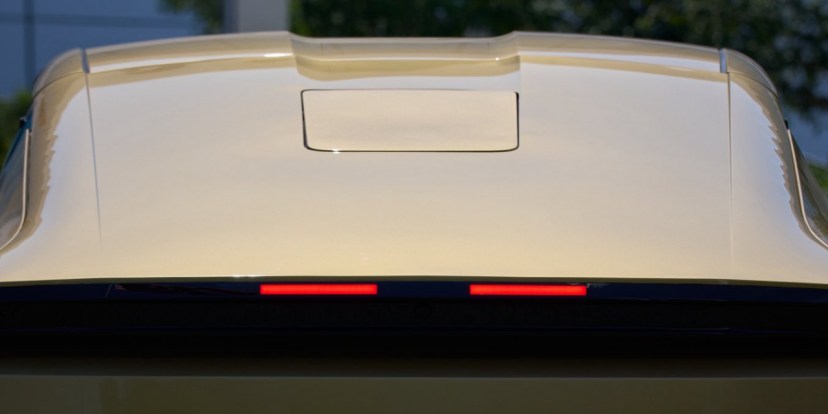
Captured in recent imagery against the backdrop of the Texas heat, a striking gold-finished Tesla Cybercab has emerged at Gigafactory Texas. With its signature butterfly doors extended beneath the Lone Star flag, the vehicle presents a vision of minimalist, high-tech transportation. However, the most intriguing detail isn’t the paint job or the door mechanism; it is the low-profile Starlink terminal seamlessly integrated into the roofline, signaling a departure from traditional automotive connectivity.
From Digital Concept to Physical Reality
What we are witnessing is the transition of Tesla’s ambitious CAD renderings into a tangible, operational prototype. While the initial reveal of the Cybercab sparked debates regarding its design language and manufacturing feasibility, the presence of satellite hardware suggests that Tesla is prioritizing robust, ubiquitous connectivity over standard cellular reliance. For those of us obsessed with the intricacies of vehicle architecture, this integration raises a fundamental question: Is this a necessity for autonomy, or a strategic move to ensure the Cybercab remains operational in the most remote environments?
Redefining Connectivity for Autonomous Fleets
When Elon Musk revealed the Cybercab in late 2024, the industry was quick to analyze the implications for the $25,000 price point and the future of ride-hailing. By embedding Starlink technology directly into the chassis, Tesla is effectively bypassing the limitations of terrestrial 5G networks. In the context of autonomous driving, where latency and data throughput are critical for real-time decision-making and fleet management, satellite-to-vehicle communication could provide the redundancy required for true Level 5 autonomy.
Consider the current landscape: traditional autonomous vehicles often struggle in “dead zones” where cellular coverage is spotty. By leveraging a satellite constellation, the Cybercab ensures that its “brain”-the FSD (Full Self-Driving) computer-remains tethered to the cloud regardless of geography. This is akin to moving from a local Wi-Fi connection to a global, always-on fiber optic link, ensuring that software updates, map data, and emergency overrides are never interrupted.