



Breaking the Mold: How BYD is Disrupting Japan’s Kei Car Monopoly
For decades, the Japanese “kei car” market has functioned as a closed ecosystem, effectively shielded from international competition. Domestic giants like Suzuki, Daihatsu, Honda, and Nissan have maintained a firm grip on this niche, producing highly specialized, compact vehicles tailored to meet Japan’s rigid regulatory standards. For global automakers, the investment required to engineer a vehicle that fits these strict dimensional constraints-designed specifically to navigate the narrow, winding streets of cities like Tokyo-was historically viewed as a poor return on investment. Most foreign manufacturers simply opted to stay away, viewing the segment as an impenetrable fortress.
### A New Challenger Enters the Arena
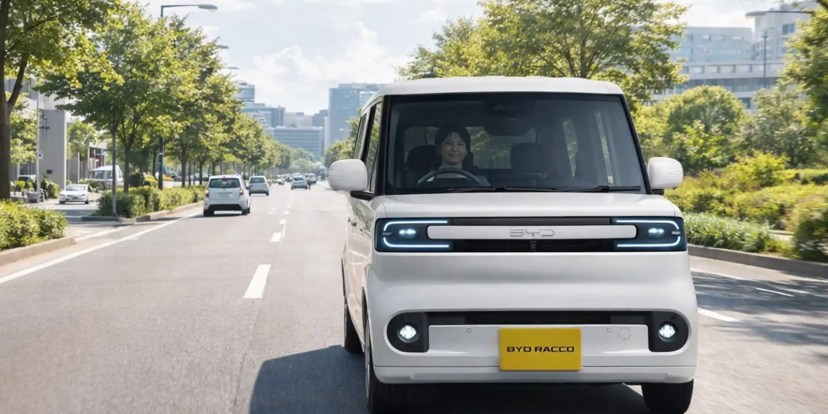
However, BYD has chosen to ignore the conventional wisdom that has kept other global players at bay. As a dominant force in the global electric vehicle sector, the Chinese manufacturer is attempting a feat never before accomplished by an overseas brand: launching a purpose-built, all-electric kei car designed from the ground up for the Japanese consumer.
This new model, dubbed the “Racco”-a nod to the Japanese term for the sea otter-is more than just a compact city car; it is a strategic tool intended to dismantle the barriers of Japan’s insular automotive landscape. By focusing on electrification, BYD is betting that the transition to green energy will provide the leverage needed to compete with established local incumbents.
### Redefining the Micro-Car Experience
The arrival of the Racco signals a shift in how micro-mobility is perceived. While traditional kei cars have long relied on internal combustion engines to meet their efficiency goals, BYD is leveraging its expertise in battery technology to offer a modern, tech-forward alternative.
Recent industry data suggests that Japan’s EV adoption rate is beginning to accelerate, with consumers increasingly seeking sustainable options that don’t sacrifice the practicality required for urban living. By entering this space, BYD is not just introducing a new product; it is challenging the status quo of a market that has remained largely stagnant in its design philosophy for years. Whether the Racco can successfully capture the loyalty of Japanese drivers remains to be seen, but its mere existence proves that the “impenetrable” fortress of the kei car segment is finally facing a serious, electrified threat.