


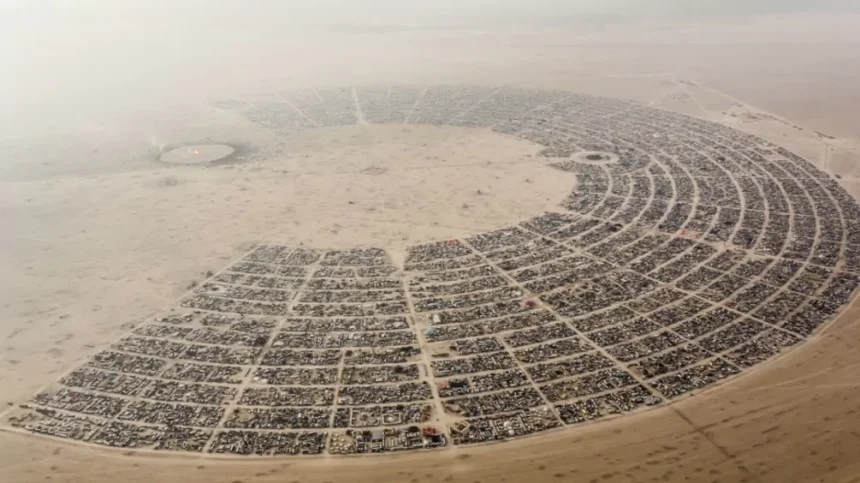
Has Burning Man Abandoned Its Countercultural Roots?
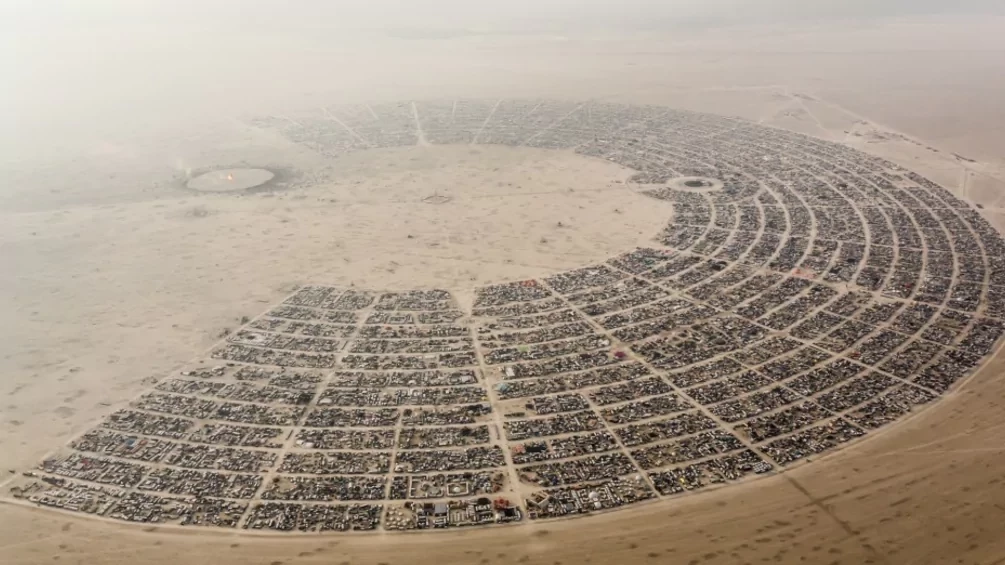
The annual pilgrimage to Nevada’s Black Rock Desert, once a bastion of radical self-expression and anti-establishment ethos, is facing a harsh critique from one of its own architects. John Law, a co-founder who helped launch the event in 1990, recently argued that the festival has undergone a profound transformation, shedding its anarchist identity in favor of becoming a playground for the affluent.
From Radical Experiment to Corporate Playground
In a candid piece for the San Francisco Standard, Law expressed his disillusionment with the current state of the gathering. Having stepped away from the event in 1996, Law notes that the modern iteration is a far cry from the gritty, experimental roots he helped cultivate. He characterizes the contemporary festival as a “commercialized escape hatch,” suggesting that the spirit of the original event has been diluted by mainstream interests.
Law’s critique centers on the perception that the festival has morphed into an “immersive spectacle” designed primarily for the consumption of the wealthy and the creative class that caters to them. He likens the current experience to a “fabulous Disneyland for the well-heeled,” arguing that the event’s marketing often masks its shift toward luxury with a veneer of high-minded philosophical discourse.
The Rise of “Plug-and-Play” Luxury
A significant point of contention for Law is the emergence of high-end amenities that contradict the festival’s core principles of radical self-reliance. The presence of “turnkey” camping experiences-where attendees can bypass the traditional hardships of desert survival-has become a flashpoint for critics.
Today, it is not uncommon for participants to arrive via private chartered flights, only to be met with:
* On-site private chefs providing gourmet catering.
* Professional styling services to curate elaborate desert aesthetics.
* Luxury climate-controlled accommodations that stand in stark contrast to the traditional tent-and-tarp setups of the past.
A Shifting Demographic
The evolution of Burning Man reflects broader trends in the experience economy. While the festival once attracted a niche group of artists and radicals, it has increasingly become a status symbol for Silicon Valley executives and global elites. Recent data suggests that the cost of attendance-when factoring in travel, specialized gear, and the rising price of entry-has created a significant barrier to entry for the very countercultural demographic that once defined the event.
For Law, the sadness stems from the realization that what was once a genuine, unscripted experiment in human connection has been packaged into a predictable, high-budget production. While the festival continues to draw tens of thousands of participants annually, the question remains: can an event maintain its “anarchist soul” when it becomes a destination for the global elite?