




The Hidden Architect of American Runway Culture
Within the hallowed halls of the Smithsonian’s National Museum of African American History and Culture, a specific dress commands attention. This 1961 vintage couture piece-a striking black velvet evening gown defined by a scoop neckline, gold sequined geometric patterns, and a delicate chiffon scarf-is more than just a relic of mid-century elegance. It serves as a tangible connection to Ophelia DeVore, a visionary who fundamentally altered the trajectory of the American fashion industry.
### Beyond the Garment: A Legacy of Representation
While the gown itself is a masterpiece of design, its true significance lies in the woman who wore it. Ophelia DeVore was a trailblazer, widely celebrated as the nation’s first Black model. However, her most enduring contribution was not her own presence on the runway, but her commitment to opening doors for others. By establishing the Grace Del Marco modeling agency and her pioneering charm school, she cultivated a generation of icons.
DeVore’s influence acted as a catalyst for the careers of legendary figures such as Diahann Carroll, Dorothea Church, Gail Fisher, Trudy Haynes, Beah Richards, Richard Roundtree, Sue Simmons, Audrey Smaltz, Susan Taylor, Cicely Tyson, and Helen Williams.
### The Blueprint for Modern Fashion Weeks
The Smithsonian’s collection holds 31 items from DeVore’s personal archive, including five gowns and various accessories. Yet, the most provocative detail is found on the display placard, which identifies her as a foundational figure in the creation of New York Fashion Week.
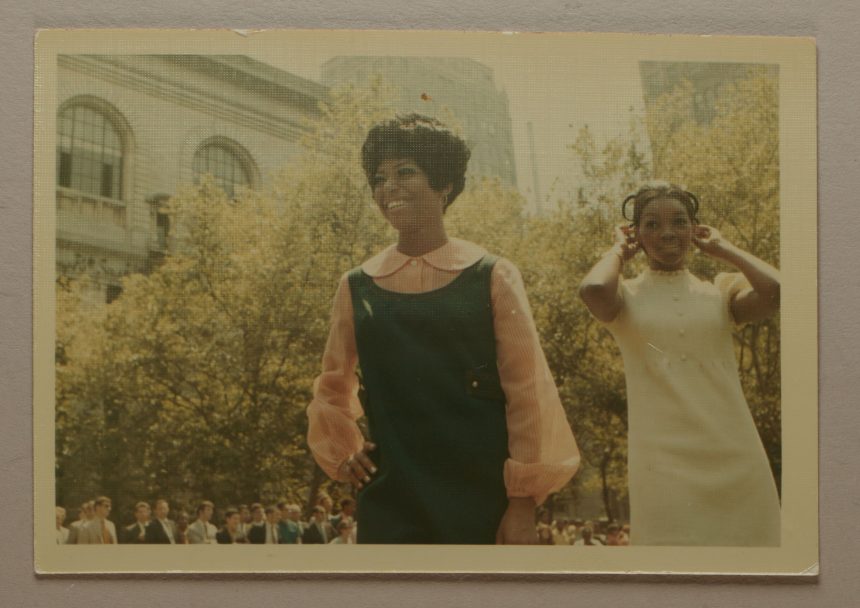
Long before the industry-wide standardization of seasonal shows, DeVore was orchestrating sophisticated, high-impact fashion presentations in New York City’s Bryant Park. Her work provided the structural blueprint for the modern runway experience. By