





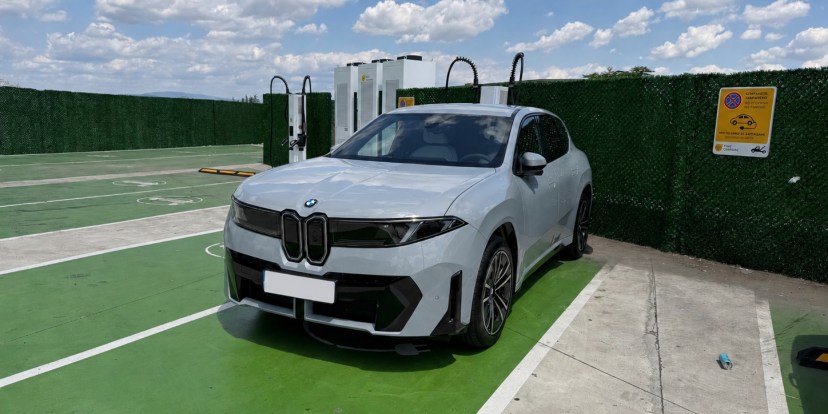
### Real-World Efficiency: Putting the BMW iX3 50 xDrive to the Test
When we took possession of our latest BMW iX3 50 xDrive, we were eager to move beyond the manufacturer’s laboratory estimates and see how the electric SUV performed under genuine driving conditions. To get a true sense of its capabilities, we bypassed short city commutes and opted for a rigorous long-distance evaluation.
#### Assessing Range Across Diverse Terrains
Our initial excursion took us from the dealership directly to the coast, a journey spanning nearly 400 kilometers. To push the vehicle further, we extended our return trip, starting from a point even further inland, which saw us eclipse the 400-kilometer threshold in a single stint.
In the world of electric vehicles, elevation is a critical factor in energy consumption. Because our starting point is situated at a significantly higher altitude than our seaside destination, we anticipated a clear disparity in efficiency. Physics dictates that descending toward the coast should yield superior energy recovery and lower consumption, while the climb back home would inevitably demand more from the battery pack.
#### Analyzing the Data
The results confirmed our hypothesis regarding topography. While the outbound trip benefited from the descent, the return leg required more power to overcome the incline. Interestingly, as evidenced by the trip computer data captured during our drive, the initial leg was completed in a slightly shorter timeframe with a marginally higher average speed, demonstrating that the iX3 maintains consistent performance even when pushed over long distances.
#### Why Real-World Testing Matters
Current industry data suggests that while WLTP range ratings provide a baseline, real-world efficiency can fluctuate by 15-20% depending on driving style, ambient temperature, and road gradient. For instance, similar to how a traditional internal combustion engine struggles with fuel economy on steep mountain passes, EVs must manage thermal loads and regenerative braking efficiency when navigating significant elevation changes. Our experience with the iX3 highlights that despite these variables, the vehicle remains a highly capable long-distance cruiser, offering predictable range even when the terrain is less than ideal.