





The Enigma of Spatial Intelligence: Why World Model Startups Are Playing It Close to the Vest
During a recent panel discussion at the All In conference, I found myself navigating the opaque landscape of “world models”-a sector currently shrouded in as much mystery as it is in venture capital. With industry titans like Yann LeCun’s AMI Labs and Fei-Fei Li’s World Labs leading the charge, the hype is palpable. Yet, despite the massive influx of funding, these organizations remain remarkably quiet regarding their path to profitability.
Defining the Frontier: Beyond Generative AI
At its heart, the pursuit of world models is an attempt to codify spatial intelligence. Unlike standard Large Language Models (LLMs) that predict the next token in a sequence, world models aim to simulate the physical laws and spatial relationships of our environment. The potential applications are vast, ranging from the next generation of autonomous navigation and sophisticated robotics to hyper-realistic, interactive media environments. According to recent industry projections, the global market for spatial computing and AI-driven robotics is expected to reach over $300 billion by 2030, underscoring why investors are pouring billions into these research-heavy ventures.
The Commercialization Conundrum
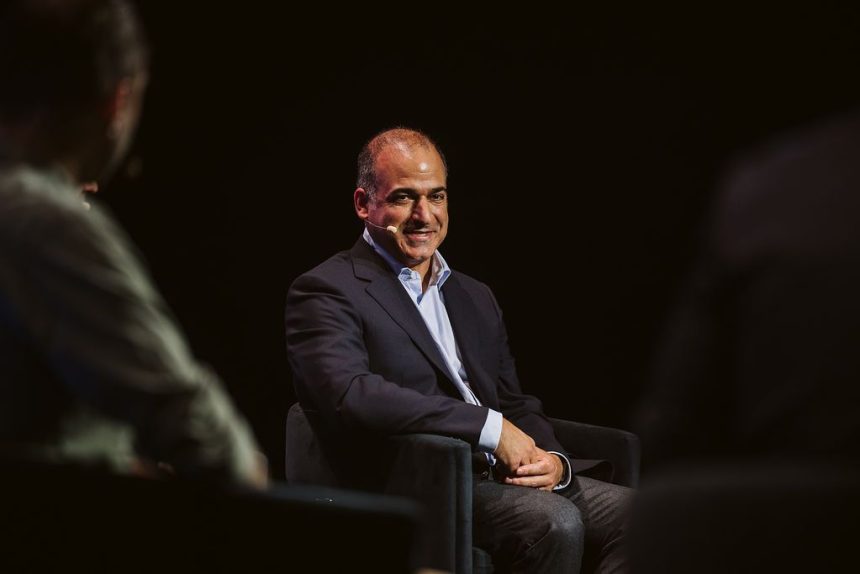
Despite the theoretical promise, the transition from academic research to a viable commercial product remains elusive. When I questioned industry leaders on the panel about their monetization strategies, the responses were notably guarded. Michael Rabbat, co-founder and VP of World Models at AMI Labs, exemplified this cautious stance. When pushed for specifics on product roadmaps, Rabbat remained tight-lipped, noting that the company is currently prioritizing foundational research over public disclosure.
In a follow-up correspondence, Rabbat reiterated this position: “We are currently in a deep-build and research-intensive phase. Consequently, we aren’t prepared to share specific product timelines or commercial strategies at this juncture.”
Why the Silence?
This “stealth mode” approach is common in high-stakes AI development. Much like the early days of the internet, where companies focused on building infrastructure before defining the business model, world model startups are currently obsessed with solving the “physics engine” problem. They are essentially trying to teach machines how to understand the world in three dimensions-a task significantly more complex than processing text. Until these models can reliably predict physical outcomes in real-time, public product announcements remain a secondary concern to the rigorous engineering required to make the technology functional.
To be fair,