


## TinyBuild’s Strategic Growth: Analyzing the H1 2026 Financial Landscape
TinyBuild is currently navigating a period of robust expansion, bolstered by a diverse development pipeline and a refined methodology for identifying, vetting, and promoting gaming properties. According to the company’s leadership, this operational framework-which balances the cultivation of established franchises with the incubation of fresh intellectual property (IP)-remains the cornerstone of their market strategy.
### Revenue Momentum and Portfolio Performance
For the six-month window concluding June 30, 2026, TinyBuild posted a notable 18% uptick in revenue, reaching $20 million. This financial growth was primarily fueled by a dual-engine approach: the consistent performance of their legacy library and the successful rollout of new gaming experiences.
A critical takeaway from the unaudited results is the company’s heavy reliance on proprietary assets. Approximately 85% of their gaming revenue is now derived from first and second-party owned IP. Notably, second-party titles have begun to play a more significant role in the company’s financial health, signaling a shift in how TinyBuild leverages external development partnerships to bolster its internal ecosystem.
### The Power of Evergreen Assets
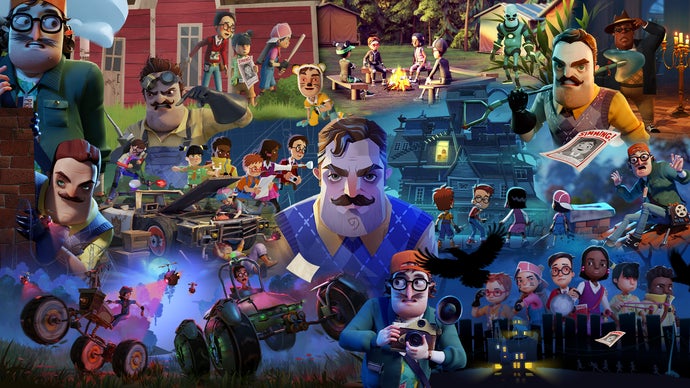
The longevity of TinyBuild’s back catalogue remains a primary stabilizer for the business. During the first half of the year, legacy titles accounted for 68% of total gaming revenue. Games like *Hello Neighbor* and *Graveyard Keeper* continue to function as “evergreen” assets, generating steady, predictable income long after their initial release windows.
This reliable cash flow provides the necessary financial runway to support the launch of newer, riskier projects. Recent additions to the market, such as *Hozy*, *All Will Fall*, and *Sand: Raiders of Sophie*, have benefited directly from this stable foundation. Furthermore, the company has been aggressive in expanding its reach, recently bringing *I Am Future* to consoles, releasing *Kill It With Fire 2* on the Nintendo Switch, and deploying fresh DLC for *The King is Watching*.
### Profitability Metrics and Market Realities
While top-line revenue is trending upward, the company’s bottom line reflects the costs associated with its current growth phase. Gross profit saw a slight contraction of 5.7%, dipping from $10.4 million to $9.8 million. Management attributes this decline to increased royalty obligations, a direct consequence of the commercial success of their second-party titles.
Similarly, adjusted EBITDA experienced a 23.2% decrease, moving from $4.2 million to $3.2 million. In the current gaming climate, where user acquisition costs are rising-often exceeding $5 to $10 per install for mid-core titles-TinyBuild’s investment in second-party partnerships represents a calculated trade-off: sacrificing short-term margins to secure a larger, more diverse market share. By prioritizing IP ownership, the company is positioning itself to capture long-term value rather than chasing immediate, one-off spikes in profit.