





Apple’s Smart Home Strategy: What to Expect from the Upcoming Launch
With the clock ticking down to tomorrow’s highly anticipated event, the tech community is buzzing with speculation regarding Apple’s pivot toward a more robust smart home ecosystem. According to the latest insights from Bloomberg’s Mark Gurman in his PowerOn newsletter, the company is preparing to unveil hardware that could fundamentally change how we interact with our living spaces.
Introducing HomeView: Apple’s New Command Center
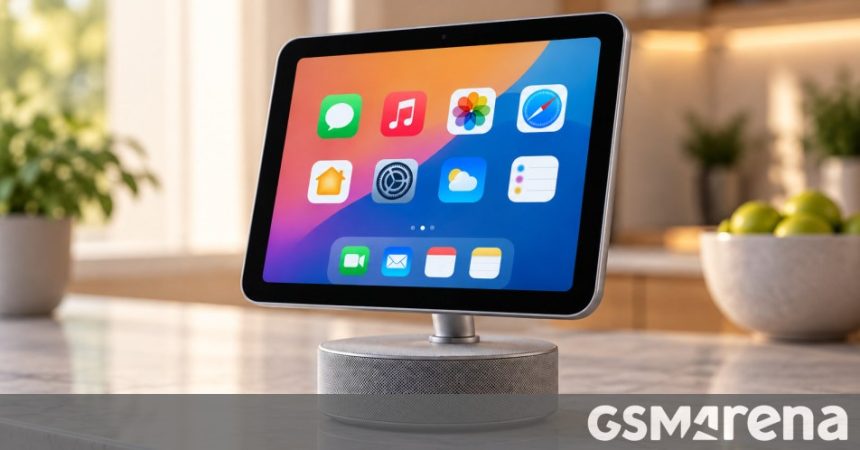
The centerpiece of the announcement is expected to be “HomeView,” a dedicated smart home control hub. Rather than a one-size-fits-all approach, Apple is reportedly diversifying its hardware to suit different home layouts. The primary model is designed for tabletops, featuring a sleek metal speaker base and a palette of four sophisticated finishes: starlight, pink, silver, and space gray. For those looking to save counter space, a wall-mounted variant will also be available, offered in classic silver and space gray.
While these devices are currently represented by concept renders rather than official photography, the hardware specifications are quite compelling. Each unit will be powered by the Apple A18 chip-the same high-performance silicon found in the iPhone 16, 16 Plus, and 16e. This suggests that the device will be more than capable of handling complex automation tasks and fluid interface navigation on its rumored 6-inch touchscreen.
A Curated Experience
Unlike the iPad, which serves as a general-purpose tool, HomeView appears to be a specialized appliance. Reports indicate that the device will ship with a curated selection of first-party Apple applications. Notably, there will be no App Store access, signaling that Apple intends for this to be a focused, distraction-free control center for your home rather than a secondary computer. Consumers can look forward to a mid-November rollout for these devices.
Refreshing the Audio Lineup
The hardware refresh isn’t limited to displays. Apple is also poised to update its audio offerings with a new HomePod mini. This iteration is expected to integrate the S10 chip, the same processor that drives the Apple Watch Series 10 and Series 11. By bringing watch-grade processing power to the HomePod mini, Apple is likely aiming to improve voice recognition and local processing speeds, ensuring that Siri remains responsive even in busy households.
As the smart home market continues to grow-with global projections suggesting the sector will reach over $200 billion by 2027-Apple’s move to consolidate its ecosystem with dedicated, high-performance hardware is a strategic play to capture a larger share of the connected home market.