





# Strengthening Your Inbox: How Google Messages Uses AI to Thwart Sophisticated Scams
Modern digital fraud has evolved far beyond the clumsy “lottery winner” notifications of the past. Today’s cybercriminals are playing the long game, often initiating seemingly benign interactions to build rapport before pivoting to malicious intent. To combat this, Google is upgrading its defense mechanisms, ensuring that your primary communication hub remains a secure environment.
## The Evolution of Android Security
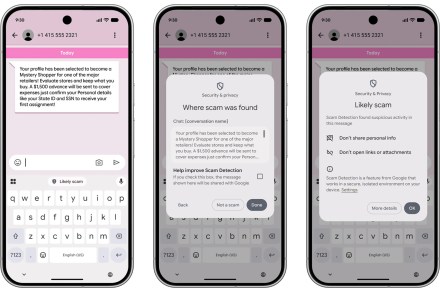
Google recently unveiled an Enhanced Protection mode for Google Messages, a feature currently making its way to Android users globally. This optional security layer represents a significant shift in how mobile devices handle incoming threats, moving away from static blacklists toward dynamic, context-aware analysis.
As mobile fraud continues to rise-with the Federal Trade Commission reporting that consumers lost over $10 billion to fraud in 2023 alone-these proactive measures are becoming essential. By integrating advanced safety tools, Google is effectively closing the gap between human intuition and machine-speed threat detection.
## Gemini: Your AI-Powered Digital Bodyguard
While Google Messages has long utilized automated filters to catch obvious spam, the integration of Gemini marks a new frontier. Rather than simply flagging known malicious domains, the system now employs cloud-based AI models to analyze the intent behind a message.
Consider the “impersonation trap”: a scammer might pose as a courier claiming a package is stuck in customs, or a bank official alerting you to a fraudulent charge. Previously, these messages might have bypassed filters because they lacked traditional “spammy” keywords. Now, Gemini evaluates the context of the conversation, particularly when the sender is not saved in your contacts. If the AI detects patterns consistent with social engineering or phishing, it triggers real-time warnings, effectively acting as a digital filter that understands nuance.
## Why Contextual Awareness Matters
The primary advantage of this AI-driven approach is its ability to adapt to the shifting tactics of bad actors. By analyzing the structure and tone of a conversation, the system can identify red flags that a human might miss during a busy day. Whether it is a request for sensitive personal information or a subtle push toward a malicious URL, the enhanced protection mode provides a critical layer of friction, giving you the time to pause and verify the sender’s identity before taking action.
As these tools become standard, the barrier to entry for scammers increases, making it significantly harder for them to exploit trust through text-based communication.