





The Fascinating Origins and Evolution of Singapore Noodles
For many families with roots in Cantonese culture, weekend outings to local dim sum parlors or noodle houses were a cherished ritual. While steamed rice is a staple of the Chinese diet, these weekend excursions often prioritized the complex textures of wheat and rice-based noodle dishes. The rotation was predictable yet satisfying: savory beef chow fun, crispy chow mein, delicate rice noodle rolls, and the vibrant, aromatic standout-Singapore noodles.
A Culinary Misnomer: Why “Singapore”?
Despite its name, Singapore noodles (or Singapore mei fun) have no actual historical ties to the city-state of Singapore. Instead, this stir-fry is a quintessential product of Hong Kong’s culinary ingenuity. During the mid-20th century, Cantonese chefs in Hong Kong began experimenting with ingredients introduced through British colonial trade routes.
The defining element of the dish-yellow curry powder-was a direct result of this global exchange. By incorporating these bold, warm spices into traditional thin rice vermicelli, chefs created a fusion dish that bridged the gap between local Cantonese techniques and the influence of the British Empire’s spice trade. Today, it remains a global favorite, frequently appearing on takeout menus from London to San Francisco.
The Anatomy of a Perfect Stir-Fry
What makes this dish endure in the competitive landscape of Chinese cuisine is its versatility. Unlike many traditional stir-fries that rely on soy or oyster sauce bases, Singapore noodles rely on the dry, fragrant heat of curry powder.
* The Foundation: Thin, translucent rice vermicelli provides a light, springy texture that absorbs the curry seasoning without becoming soggy.
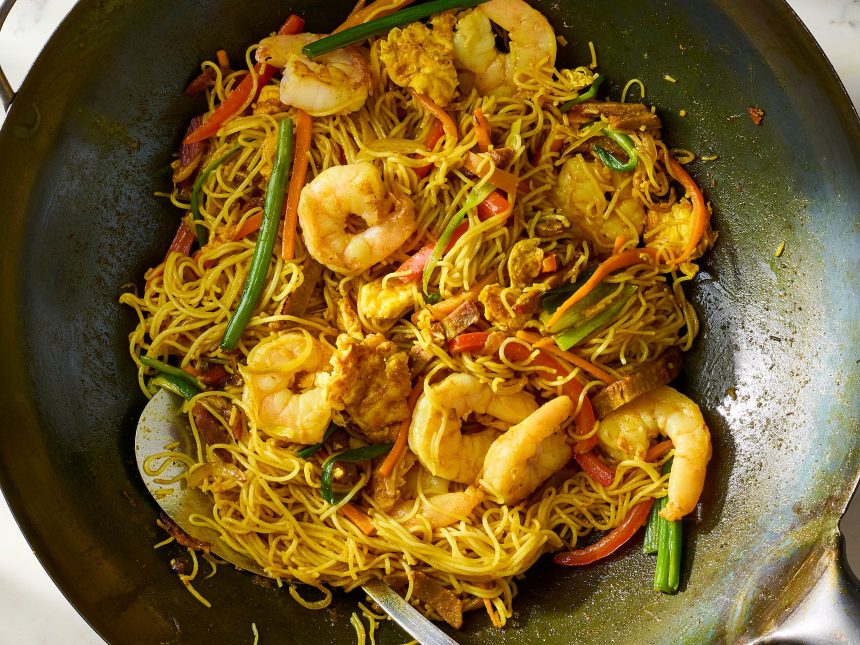
* The Protein: While traditional versions often feature a mix of char siu (barbecued pork), shrimp, and scrambled eggs, modern iterations are highly adaptable. Many home cooks now incorporate tofu or extra vegetables to suit plant-based diets.
* The Aromatics: A combination of bell peppers, onions, and bean sprouts adds a necessary crunch, balancing the soft noodles and the savory, spiced profile of the dish.
Why It Remains a Takeout Staple
The popularity of Singapore noodles has only grown as global palates have become more accustomed to spiced, savory profiles. According to recent industry trends in Asian-fusion dining, dishes that offer a “flavor-forward” experience-combining familiar textures with bold, aromatic spices-consistently rank among the top-ordered items in urban centers. It is a dish that proves how culinary boundaries are often blurred by history, resulting in something entirely new and delicious.