



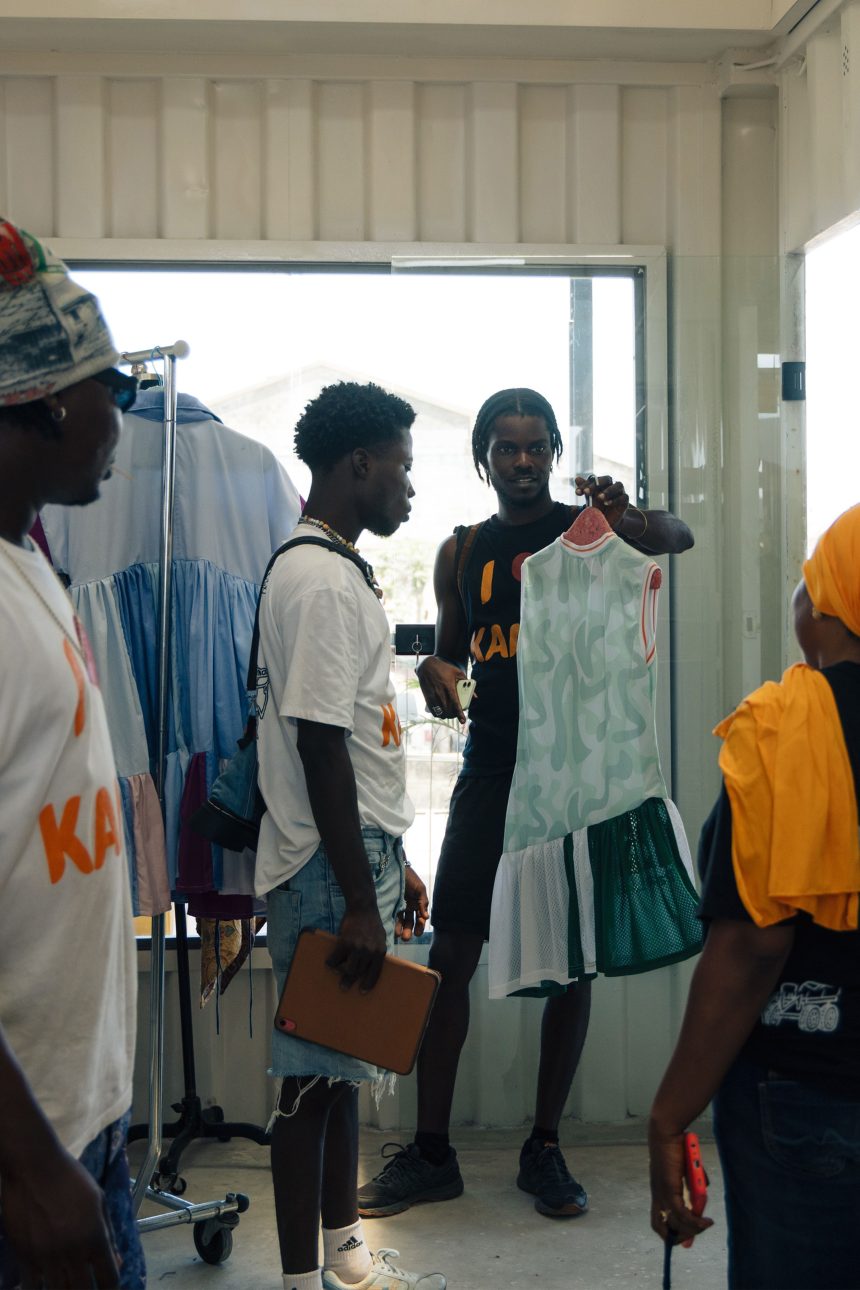
In January 2025, a devastating fire broke out at Ghana’s Kantamanto Market, burning around 60% of the market to ashes and wiping out thousands of livelihoods in the process. It wasn’t the first fire at Kantamanto Market, and it might not be the last.
One of the world’s largest circular fashion ecosystems, Kantamanto Market is a vibrant tangle of upcyclers, secondhand retailers, and other market traders, bursting with creativity. But it’s also an informal economy with limited guardrails around safety. Food is prepared on open fires right next door to where highly flammable, polyester textile waste is sorted, all the while some of the market’s fashion traders still use coal-fired irons, because they can’t afford electricity. Despite an extensive electrification project as part of the rebuilding efforts, 40% of the market is still supplied with unsafe, bare-wire electrical connections, turning even the most basic fans and lighting into fire hazards. Plus, the lanes between stalls are so narrow that bales of used clothing is transported via headcarrying rather than trolleys — firefighters have no hope of fitting fire engines inside, and without access to running water, even fire hoses are a logistical no.