




The Rise of Red Tourism: Exploring Soviet Echoes in Yerevan
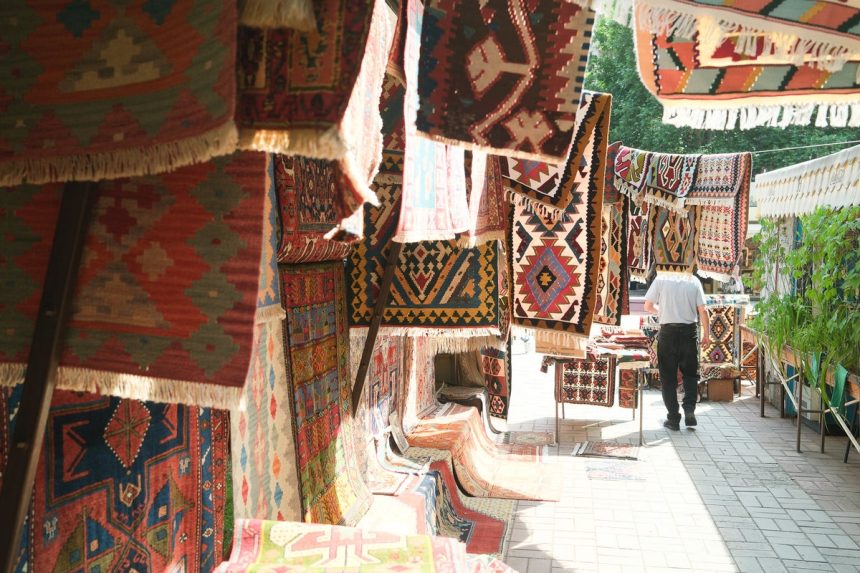
If you wander through the bustling corridors of Yerevan’s Vernissage market, you might notice a specific breed of traveler. Often in their thirties, these visitors bypass the vibrant displays of handmade jewelry, traditional textiles, and local dried fruits. Instead, they are on a quest for something more tangible from the past: the remnants of the USSR.
Their focus is fixed on dusty boxes filled with military medals, weathered Communist Party pins, and vintage propaganda. One traveler might be seen haggling over a cigarette case emblazoned with the visage of Joseph Stalin, while another inspects a collection of unopened, decades-old cigarette packs. This is the burgeoning phenomenon of “Red Tourism”-a niche travel movement dedicated to exploring the history and artifacts of former communist states.
## Why Yerevan is a Hub for Soviet Nostalgia
While Red Tourism has gained traction across the Baltics and Central Asia, Armenia’s capital has emerged as a premier destination for those seeking an authentic encounter with the past. Unlike cities that have scrubbed their streets of communist-era aesthetics, Yerevan wears its history openly.
The collapse of the Soviet Union in 1991 may have ended an era, but the architectural legacy remains firmly etched into the city’s skyline. Massive, imposing apartment blocks and intricate wall mosaics serve as daily reminders of a bygone superpower. For many, this “unpolished” history is exactly what makes the city so compelling.
## The Urgency of Preserving the Past
Morgan Bourven, a specialist at Young Pioneers Tours-a company known for organizing trips to unconventional destinations like North Korea-notes that the surge in interest is largely driven by a sense of urgency. As Soviet-era structures are renovated or demolished and physical relics become scarcer, travelers feel a pressing need to witness these sites before they vanish entirely.
Currently, Belarus stands as a top-tier destination for this demographic, largely due to its proximity to the Chernobyl Exclusion Zone, which remains inaccessible via Ukraine. This trend highlights a global fascination with “dark tourism,” where the allure lies in the intersection of history, decay, and geopolitical significance.
## Navigating the Ethics of Red Tourism
However, the rise of this travel trend is not without its complexities. Bourven warns that the primary risks are social rather than physical. “Wearing a USSR-branded shirt in certain former Soviet territories can trigger intense negative reactions,” he explains, noting that for many locals, the memories of that era are deeply painful rather than nostalgic.
The core challenge for the modern traveler is to avoid romanticizing a period of history that was marked by significant hardship. The goal of responsible Red Tourism should be educational-fostering a deeper understanding of the past rather than celebrating it. It is vital that visitors approach these sites with humility, respecting the local perspective rather than imposing their own interpretations of history.
## Beyond the Soviet Lens: A Complex National Identity
It is important to remember that the Soviet era is merely one chapter in Armenia’s long and often turbulent history. A visit to the Armenian Genocide Museum provides a sobering look at the mass killings perpetrated by the Ottoman Empire during World War I-a tragedy that remains a central, painful pillar of the national consciousness.
Furthermore, the towering “Mother Armenia” monument, which stands 50 meters tall, serves as a poignant reminder of the country’s ongoing struggle for stability. Following decades of conflict over the Nagorno-Karabakh region, the city is filled with tributes to those lost in recent years. These memorials, scattered throughout the capital, remind visitors that while the Soviet past is a draw for tourists, the contemporary reality of Armenia is defined by resilience, memory, and a fragile, hard-won peace.
Yerevan: Where Ancient Heritage Meets the Modern Digital Frontier
Nestled at the crossroads of the Middle East and Europe, Armenia is a nation frequently defined by its complex history. Yet, to view it solely through the lens of the past is to miss the vibrant, forward-looking reality of the country today. Armenia is currently undergoing a profound transformation, shedding the weight of its history to embrace a future that feels increasingly globalized and tech-forward.
The Rise of the Digital Nomad Hub
Walk through the streets of Yerevan, and you will witness a striking juxtaposition. Just steps away from centuries-old cathedrals-reminders that Armenia was the first nation to adopt Christianity as a state religion-you will find minimalist, industrial-style coffee shops. These spaces, characterized by exposed brick and high-speed Wi-Fi, are the headquarters for a burgeoning community of digital nomads and tech entrepreneurs.
Armenia has rapidly climbed the rankings as a premier destination for remote workers. This is bolstered by a massive, globally connected diaspora that bridges the gap between Yerevan and hubs like Los Angeles, Amsterdam, and Barcelona. It is common to hear young Armenians discussing international business trends over flat whites, creating an atmosphere that feels more like a burgeoning European tech capital than a post-Soviet city.
A City of Contrasts: From Ladas to Teslas
The visual landscape of Yerevan is a testament to its rapid evolution. On Republic Square, the city’s beating heart, you might see a sleek, modern Tesla gliding past a weathered Lada that has defied the odds to remain on the road for decades. This blend of the vintage and the cutting-edge defines the city’s character.
As the sun sets, the city truly comes alive. The sidewalk culture is intense; outdoor cafes remain packed well into the night, fueled by a youthful energy that mirrors the nightlife of cities like Berlin or Prague. Whether you are looking for a sophisticated jazz club, a traditional Armenian tavern, or a lively English-style pub, the city offers a social scene that is both welcoming and cosmopolitan.
The Floral Economy: Beauty and Geopolitics
Beyond the tech startups and the nightlife, there is a softer, more fragrant side to Yerevan. The city is famously obsessed with flowers. You will find them everywhere: overflowing from kiosks, lining supermarket entrances, and clutched in the hands of locals walking home late at night. This is no accident; Armenia benefits from over 300 days of sunshine annually, making it a powerhouse for floral cultivation.
However, these blooms carry significant political weight. In May 2026, Russia implemented a sweeping ban on Armenian flower imports, a move widely interpreted as retaliation for Armenia’s pivot toward the European Union. While Moscow cited “pest control” as the official reason, the timing coincided with Prime Minister Nikol Pashinyan’s Civil Contract Party securing a decisive 49.8% victory in the June elections-a clear mandate for Western integration.
For the traveler, this geopolitical tension has a practical side effect: the local market is currently flooded with an abundance of high-quality, affordable roses. These flowers, grown in the rich volcanic soil that also gives the “Pink City” its unique architectural hue, serve as a beautiful, if ironic, symbol of Armenia’s ongoing struggle to balance its historical ties with its European aspirations.
Yerevan’s Hidden Gems: A Quick Guide
- Mother Armenia: A towering 50-meter monument that offers a panoramic view of the city and serves as a poignant reminder of the nation’s resilience.
- The Cascade Complex: A massive limestone stairway that functions as an open-air art museum, connecting the city center to the upper residential districts.
Yerevan Unveiled: Why Armenia’s Capital is the Next Big Travel Frontier
While many European capitals have become synonymous with over-tourism, Yerevan remains a hidden gem that balances deep-rooted history with a burgeoning modern energy. As travel trends shift toward authentic, budget-friendly destinations, Armenia is rapidly moving from the periphery to the center of the global travel map.
### A City of Layers: From Soviet Echoes to Modern Ambition
Yerevan’s skyline tells a story of transformation. Dominating the city from Victory Park is the “Mother Armenia” statue, a towering figure that replaced a massive monument of Josef Stalin in 1961. Today, the plinth houses a military museum, while the surrounding square serves as an open-air display of tanks and missile launchers-a stark reminder of the region’s complex past.
The city’s appetite for the monumental continues today. Near the village of Zovuni, the construction of a colossal statue of Christ-poised to become the tallest of its kind globally-has sparked intense debate. Regardless of the controversy, the workshop where this giant is being forged has already become a pilgrimage site for curious travelers.
For a more intimate look at local ingenuity, visit “Levon’s Divine Underground.” What began as a simple request from a wife for a potato cellar evolved into a 23-year obsession. Levon hand-carved an intricate labyrinth beneath his home, which his family now preserves as a testament to his singular, subterranean vision.
### Beyond the City Limits: Landscapes and Legends
While Yerevan is captivating, the true soul of Armenia lies in the countryside. A short hour-long drive brings you to Lake Sevan, a high-altitude freshwater expanse. Perched on its peninsula is a 9th-century monastery that offers a serene contrast to the nearby Soviet-era writers’ resort, which has been repurposed into a charming hostel and café.
For those looking to explore further, the region is a tapestry of rolling hills and ancient architecture. Essential stops include the Greco-Roman Temple of Garni, the cliff-carved Geghard Monastery, and the dramatic vistas of Azat Canyon.
### A Tourism Renaissance
Yerevan is currently experiencing a surge in popularity, fueled by increased connectivity. Recent government statistics reveal that tourist arrivals for the first four months of 2026 saw a 34% increase compared to 2025. Much of this is attributed to new budget flight routes, such as those operated by WizzAir, which have made the city significantly more accessible. Despite this growth, the city remains remarkably affordable, with a pint of local beer often costing as little as £2.
### A Culinary Journey
Armenian cuisine is a compelling reason to visit in its own right. The scent of *lavash* bread, pulled fresh from traditional underground *tonir* ovens, fills the streets. Don’t miss *Lahmacun*-a crispy flatbread topped with spiced minced meat and herbs-which serves as the perfect quick bite. Furthermore, Armenia’s ancient winemaking tradition is currently undergoing a massive revival, with local labels gaining international acclaim.
A visit to the central food market is a sensory overload. Stalls are piled high with vibrant dried fruits, walnuts, and aromatic spices, creating a display that feels almost curated for social media. In the back, the market retains its raw, traditional character, where livestock and fresh fish are sold in a bustling, unfiltered environment.
### The Celebrity Connection
Armenia’s global influence is amplified by its massive diaspora, most notably the Kardashian family. Their cultural footprint is visible throughout the city; at the renowned Dolmama restaurant, the menu is accompanied by a “wall of fame” featuring photos of celebrity visitors, ranging from Hillary Clinton and Vladimir Putin to System of a Down and Kanye West, who famously performed an impromptu concert in the city in 2015.
Despite the influx of luxury hotels and high-end boutiques in the city’
Yerevan: A Captivating Blend of Ancient Heritage and Modern Ambition
Yerevan possesses a magnetic quality that draws in both long-term residents and curious wanderers. It is a city that refuses to be defined solely by its history; instead, it acknowledges its complex past while aggressively pursuing a vibrant, contemporary future. This delicate balance between honoring ancestral roots and embracing global innovation is exactly what makes the Armenian capital so compelling.
As the sun dips below the horizon, the city’s dual personality comes to life. You might find street-side vendors meticulously curating bouquets of fresh blooms under the glow of amber streetlights, while just a few blocks over, vintage enthusiasts scour local markets for rare Soviet-era artifacts. These contrasting scenes are merely snapshots of a city that is rapidly becoming a must-visit destination for global travelers.
Streamlined Travel: Reaching the Armenian Capital
For years, reaching Yerevan from the United Kingdom was a logistical challenge, often requiring lengthy layovers or a grueling five-hour road trip from Tbilisi, Georgia. However, the travel landscape shifted significantly with the introduction of direct air travel. WizzAir now operates a consistent, non-stop service connecting London Luton Airport to Yerevan. With flights departing twice weekly-every Monday and Friday-the city is more accessible than ever, with entry-level fares starting at approximately £45.99.
Curated Accommodations: Where to Rest Your Head
Yerevan’s hospitality sector has matured alongside its tourism industry, offering a diverse range of options that cater to every type of traveler, from the budget-conscious backpacker to the luxury seeker.
Budget-Friendly Stays
For those prioritizing affordability, the city offers a robust network of hostels. Travelers can secure a comfortable bed in a social environment for as little as £10 per night, making it an ideal base for those looking to stretch their travel budget further.
Historic Elegance
If you prefer your stay to be steeped in history, the Grand Hotel Yerevan is an architectural landmark. Constructed in 1928, this iconic property sits on Abovyan Street-the historic heart of the city’s pre-Soviet era. It offers a refined atmosphere for roughly £120 per night, blending classic charm with modern service.
Luxury and Modern Amenities
For travelers seeking an elevated experience, The Dvin stands as a premier choice. Located just a short distance from the city center, this expansive resort features high-end suites, a professional-grade tennis court, and a stunning rooftop infinity pool that provides panoramic views of the skyline. The property also hosts “The Stage,” a restaurant known for its vibrant live music and dance performances. Rates for this premium experience begin at £200 per night.
International Standards
Beyond boutique and historic offerings, Yerevan has integrated seamlessly into the global hospitality market. Visitors who prefer the consistency of international brands will find a familiar selection of major chains, including Marriott, Hilton, and Best Western, scattered throughout the city.
Note: This travel overview is based on firsthand experience, including travel on the inaugural WizzAir route from London Luton to Yerevan.