


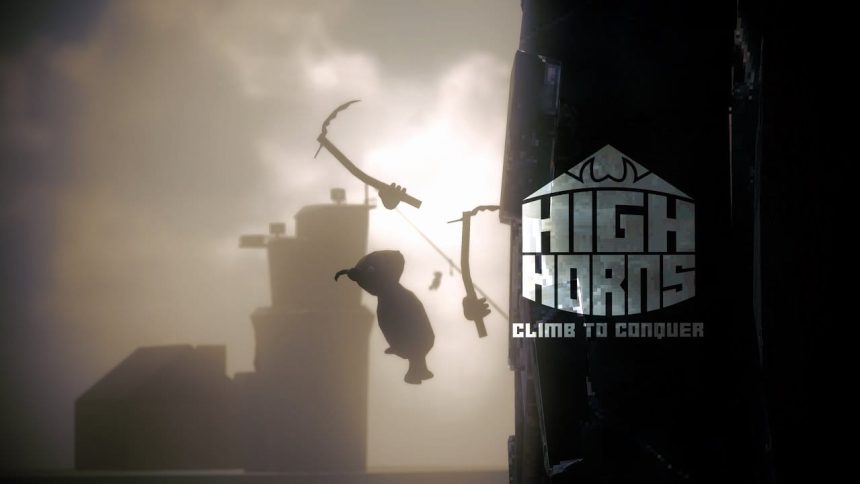

The VR Social Hangout Saturation Point: Reflections on High Horns
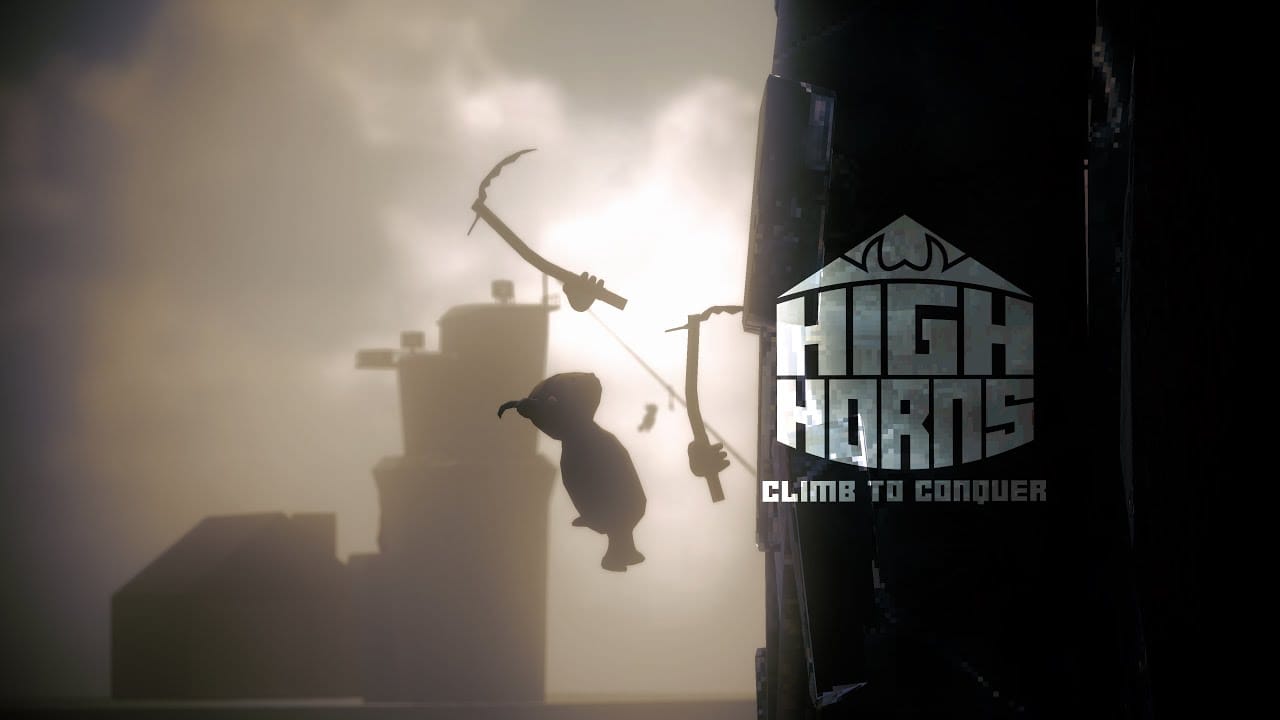
During last month’s Augmented World Expo (AWE), I spent some time testing High Horns, an upcoming social VR title centered on arm-based locomotion and climbing mechanics. While the experience was functional, it prompted a broader, more critical question: have we finally hit a wall regarding the value of free-to-play social VR hangouts?
A Rapid-Fire Development Strategy
High Horns is the latest project from XORWire, a studio that has been remarkably prolific-perhaps to a fault. This title marks their fifth release since December 2024. Their recent catalog includes BreakoutVR, Chemp Physics, Stupid Chimp Slop, and Munkie All-Stars, the latter of which hit the market on May 29, just weeks before my AWE demo.
This aggressive release cadence-five games in roughly 18 months-is difficult to ignore. In an industry where quality and long-term community support are usually the pillars of success, such a high-velocity output raises concerns about the sustainability and depth of these experiences. It mirrors a “spaghetti at the wall” approach, where developers hope one title gains traction by sheer volume rather than refined design.
Hands-On Impressions: The Climbing Experience
My twenty-minute session with High Horns was, to put it mildly, unremarkable. The core gameplay loop felt standard, lacking any unique hook to differentiate it from the crowded field of existing VR climbing simulators. I encountered two specific technical hurdles that hampered the immersion:
- Input Latency: A persistent “sticky hands” bug caused virtual grips to release a fraction of a second too late. This resulted in a jarring, unnatural snapping motion whenever I attempted to transition between handholds.
- Visual Ambiguity: The environment design failed to clearly communicate which surfaces were interactive. I frequently found myself attempting to scale non-climbable walls, as there was no visual distinction between traversable rock faces and static background geometry.
I relayed these observations to the development team on-site. While I acknowledge that I am not the primary demographic for this specific genre, the experience served as a microcosm for the current state of the VR social market.
Is the Market Reaching Diminishing Returns?
The VR social hangout space is currently experiencing a “gold rush” mentality, but the data suggests a cooling trend. According to recent industry reports, user retention in free-to-play social VR apps has seen a plateau as the market becomes increasingly fragmented. When players are presented with dozens of nearly identical “climb and chat” experiences, the novelty wears off quickly.
Much like the mobile app store boom of the early 2010s, we are seeing a saturation of low-barrier-to-entry titles. When developers prioritize quantity over the polish required for long-term engagement, the result is a diluted ecosystem. For a game to survive today, it needs more than just a functional climbing mechanic; it needs a distinct identity and a level of technical refinement that High Horns-at least in its current state-has yet to achieve.
As we continue to track the output of studios like XORWire, the industry must ask: is the goal to build a lasting virtual community, or simply to occupy space on the storefront? For now, the sheer volume of these releases suggests the latter, and that is a trend that may ultimately hurt the VR ecosystem more than it helps.
The VR Industry’s Pivot: Why Free-to-Play is Becoming the New Standard
The virtual reality landscape is currently undergoing a painful transformation. Recent months have seen a wave of layoffs and the permanent closure of several VR studios. When explaining these difficult decisions, many developers cite a market that has failed to meet growth expectations, leading some to abandon VR entirely in favor of flatscreen development.
While premium, paid titles have historically been the backbone of the industry, they are increasingly struggling to find a foothold. In contrast, the most successful games in the current VR ecosystem are almost exclusively free-to-play.
The Dominance of Free-to-Play on Meta Horizon
A quick glance at the “Most Popular” charts on the Meta Horizon Store reveals a stark reality: paid games are becoming the exception rather than the rule. In the top ten most popular titles, only two-*Beat Saber* and *Blade & Sorcery: Nomad*-require an upfront purchase.
Expanding the scope to the top twenty, the list only adds *Bonelab* and *Job Simulator*. The rest of the leaderboard is dominated by free-to-play experiences that prioritize social interaction and long-term engagement. Titles like *Gorilla Tag* have previously boasted over one million daily active users, while *Animal Company* reports half a million. These engagement metrics are the envy of traditional flatscreen developers, who are competing for attention in a market ten times the size of the current VR user base.
Chasing the “Unicorn” Revenue Model
Given these trends, it is no surprise that developers are shifting their strategies. Studios such as Owlchemy Labs, Fun Train, and The Binary Mill are actively exploring the free-to-play social space. Recent industry events, including the Ruff Talk VR Showcase and the UploadVR Showcase, highlighted this shift with the introduction of titles like *OogaBonk* and *Jetpack Clankers*.
This mirrors the “live service” gold rush seen in the flatscreen gaming industry. Much like the high-profile failures of titles such as *Concord* or *Redfall*, the strategy is high-risk, high-reward. Developers are willing to absorb the cost of multiple failed projects in the hopes of capturing a “unicorn”-a title that achieves the massive,
The Sustainability Crisis: Why Small-Scale VR Communities Are Struggling
The team behind XORWire recently shared that their Discord server has reached 5,000 members. For an independent, solo developer, this is a commendable milestone-a solid foundation for a creator who might release another project within the year. However, when you apply this metric to a professional studio, the outlook shifts dramatically. In the high-stakes world of game development, a community of this size is rarely enough to sustain a full-time staff.
The Math Behind the Free-to-Play Model
The free-to-play (F2P) ecosystem is fundamentally a game of volume. Because these titles rely on microtransactions-such as cosmetic skins, battle passes, or digital add-ons-the revenue stream is entirely dependent on the “conversion rate.” Typically, only a small, single-digit percentage of a total player base will ever spend real money.
If you have 5,000 users, and perhaps 2% are active spenders, you are looking at roughly 100 customers. For a studio with a payroll, office overhead, and marketing costs, 100 recurring customers simply cannot keep the lights on. The economics are unforgiving; if the player pool isn’t massive, the revenue generated by those few spenders will never cover the burn rate of a professional team. We have seen this reality play out recently with the closure of high-profile social VR platforms like Rec Room, which struggled to maintain the necessary scale to justify its operational costs.
Meta’s Strategic Pivot: A Warning Sign
The industry’s largest player, Meta, appears to be acutely aware of this growth plateau. Their decision to briefly pull VR support for Horizon Worlds-a move that sent shockwaves through the industry-was a clear indicator of the platform’s internal data. Despite having access to the most comprehensive analytics in the VR space, including granular details on user demographics and daily active usage, Meta recognized that the current trajectory was unsustainable.
This decision, coupled with the shuttering of several first-party studios, suggests that the “golden goose” of social VR may not be as lucrative as once predicted. When the total addressable market for VR fails to expand at the same rate as the influx of new developers, the competition for a limited pool of players becomes cannibalistic.
Is the Market Reaching a Breaking Point?
The question remains: how much longer will developers continue to pour resources into this specific niche? As the market matures, the “build it and they will come” mentality is being replaced by a harsh reality check. Developers are beginning to realize that without a massive, consistent influx of new users, the F2P model in VR is a precarious gamble.
As we look toward the upcoming release of High Horns on the Meta Quest this fall, it will be interesting to see if the title can defy these trends. For the industry to thrive, developers must move beyond hobbyist-level community building and find ways to scale their player bases-or risk being squeezed out by the unforgiving math of the free-to-play economy.