





The Evolution of Mexico City: A New Era for Football Fans and Travelers
As England supporters descend upon Mexico City for the high-stakes Fifa World Cup knockout stage, they are stepping into a metropolis that bears little resemblance to the one I first navigated at the dawn of the millennium. Back then, my local hosts-my partner’s parents-insisted that venturing out after sunset was a security risk. Returning to the capital repeatedly in recent months, the atmosphere is palpably different; the pervasive anxiety of the past has been replaced by a modern, bustling urban energy.
The Gentrification Shift: From Mechanics to Gastronomy
The transformation of districts like Roma, Condesa, and Polanco is undeniable. Walking through these neighborhoods, one is struck by the sight of Belle Epoque architecture framed by vibrant jacaranda trees, though the soundtrack of the streets has shifted. English is now a common tongue, a byproduct of the post-pandemic surge of digital nomads who flocked to the city, drawn by relatively affordable living costs and a more flexible lifestyle compared to their home countries.
This influx has sparked a cultural renaissance, yet it has also triggered a culinary identity crisis. Chef Nano Padilla, proprietor of the trendy VORAZ restaurant in Roma, notes that the city’s rapid evolution is a double-edged sword. While he welcomes the creative energy brought by international residents, he laments the “gringo-fication” of local menus.
“Restaurants are toning down the heat,” Padilla observes with a wry smile. “Some are removing the chilli entirely to cater to foreign palates.” For a city defined by its bold, spicy heritage, this dilution of flavor is a point of contention among locals who feel the city’s soul is being subtly reshaped to suit its new inhabitants.
Navigating the Megalopolis
For the influx of football fans arriving for the Fifa World Cup, Mexico City offers an overwhelming array of design, art, and gastronomy. However, visitors must respect the sheer scale of this urban giant. With a metropolitan population exceeding 25 million, the city is a sprawling labyrinth. Traffic congestion is legendary; even a short trip across town can take hours, so planning ahead is essential for those hoping to catch the match or explore the city’s cultural landmarks.
A Palimpsest of History
Mexico City is a living history book, built upon the foundations of the Aztec capital Tenochtitlan, which dates back to approximately 1325. The Spanish conquistadors later layered their own colonial architecture over these ancient ruins, creating a unique urban fabric where the past is never truly buried.
This duality is what makes the city so compelling. My own routine involves balancing the new with the nostalgic. I make it a point to visit cutting-edge spaces like the Museo Jumex in Polanco or contemporary art exhibitions like Gala Porras-Kim’s Future spaces replicate earlier spaces at the Kurimanzutto gallery. Yet, I always return to the familiar.
Take VORAZ, for instance. It is a quintessential example of the city’s adaptive reuse: a sleek, modern eatery that occupies a space which served as a humble car mechanic’s workshop for six decades. As I enjoy a plate of gorditas-a local staple reimagined with fried oysters and celery-it becomes clear that while the city’s surface is changing, its capacity to reinvent itself remains its most enduring trait.
Travel Tips for World Cup Visitors
* Transport: Do not underestimate travel times. Use ride-sharing apps or the Metro, but always factor in significant buffer time for traffic.
* Cultural Etiquette: Embrace the local spice levels. If you want an authentic experience, look for smaller, neighborhood-run fondas rather than the tourist-heavy spots in Roma.
* Art Scene: Beyond the football stadiums, dedicate time to the city’s world-class museums. The blend of pre-Hispanic history and modern design is unparalleled globally.

Curated Stays: Where to Experience Mexico City’s Boutique Charm
Rather than staying in the bustling, tourist-heavy city center, I find that the most authentic way to experience Mexico City is by retreating to the residential neighborhoods. Over the past two decades, the city has seen a surge in high-end boutique accommodations. These properties are typically historic townhouses reimagined with lush, verdant courtyards and curated with traditional Mexican craftsmanship and local art.
For those seeking an elevated, intimate experience, Casa Polanco is a standout. With only 19 rooms, this property offers a sophisticated, private atmosphere in the heart of the upscale Polanco district.
Book your stay at Casa Polanco
If you prefer a more intimate, budget-friendly environment, family-operated gems like Villa Condesa provide a warm, residential feel. It’s a charming touch that they welcome adult travelers with a complimentary Corona upon check-in, setting a relaxed tone for your trip.
Book your stay at Villa Condesa
For the solo traveler or those looking to connect with others, The Red Tree House is an excellent choice. It fosters a communal spirit, frequently hosting evening gatherings that allow guests to mingle before heading out for dinner.
Book your stay at The Red Tree House
Cultural Immersion: Beyond the Typical Tourist Trail
While the Frida Kahlo Museum (La Casa Azul) remains a staple on every traveler’s itinerary, Mexico City’s art scene offers much more depth for those willing to explore.
A must-visit is Kurimanzutto. This gallery is architecturally unique, feeling much like a sprawling, elevated treehouse. It serves as a launchpad for Mexico’s most influential contemporary voices, such as Gabriel Orozco and Minerva Cuevas. The gallery has a storied history of unconventionality; in its early days, before securing a permanent space, the collective famously staged an exhibition inside a local produce market, displaying fine art pieces nestled between crates of fresh peppers and mangos.
<
A Culinary Journey Through Mexico City: From Iconic Cantinas to Michelin-Starred Dining
Mexico City has undergone a dramatic gastronomic transformation over the last decade. While the capital was once defined strictly by traditional cantinas, it has blossomed into a global powerhouse for mixology and fine dining. Whether you are hunting for a quick street-side bite or a reservation-only tasting menu, the city’s food and drink scene is as diverse as its history.
The Evolution of the Cocktail Scene
The modern era of Mexico City’s nightlife arguably began in 2011 with the debut of Licorería Limantour. At the time, the concept of high-end mixology was foreign to a city dominated by traditional beer halls. Today, despite a saturated market of hundreds of new bars, Limantour remains a titan, consistently ranking among the World’s 50 Best Bars.
The experience here is defined by more than just the menu; the venue’s expansive seven-metre bar is designed to foster social interaction, making it easy to strike up a conversation with fellow travelers. A standout recommendation is the Mezcal Stalk, a drink that perfectly balances local spirits with a bold, savory worm-salt rim.
Historic Cafés and Literary Legacies
Beyond the nightlife, the city’s coffee culture offers a window into its intellectual past. Café La Habana stands out as a personal favorite, serving as a living museum of the city’s literary history. It was once the preferred haunt for legendary writers like Gabriel García Márquez and Roberto Bolaño. Today, it remains the perfect spot to enjoy a traditional café lechero-a robust blend of two espresso shots topped with steamed milk-while soaking in the atmosphere of a bygone era.
Navigating the Gastronomic Spectrum
Mexico City’s dining landscape is vast, ranging from humble street carts to world-renowned culinary institutions. For those seeking the pinnacle of Mexican fine dining, Pujol in the Polanco district remains the gold standard. Chef Enrique Olvera’s flagship restaurant is a masterclass in elevating indigenous ingredients to a Michelin-starred level.
Equally iconic is Contramar, a seafood institution famous for its vibrant tuna tostadas. However, travelers should note that both Pujol and Contramar operate on a strict reservation-only basis. Securing a table often requires booking weeks, if not months, in advance.
The Art of the Taco
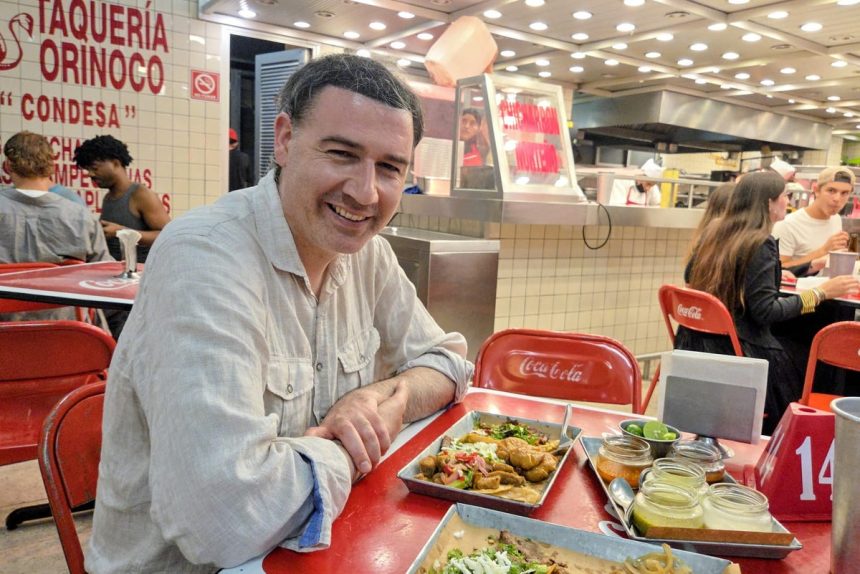
No visit to the capital is authentic without indulging in the street food culture. While the late Anthony Bourdain famously championed Los Cocuyos in the city center for its legendary tacos, there are plenty of other essential stops. For a casual, high-energy experience, Taquería Orinoco in Roma is a must-visit. Here, the setting is intentionally unpretentious-think red plastic chairs and overflowing tacos-offering a quintessential taste of the city’s vibrant street food spirit.
Read more: Eight beautiful Mexico beach towns away from the mega resorts