





Primates in the Digital Age: How AI is Revolutionizing Field Research
While the tech industry seems determined to integrate AI into every facet of our daily digital lives-from automated email summaries to camera enhancements-a more profound application of this technology is unfolding deep within the Costa Rican wilderness. Scientists are now leveraging machine learning to gain unprecedented insights into the cognitive processes of wild capuchin monkeys, all while allowing the animals to remain entirely within their natural environment.
A New Frontier for Cognitive Science
Traditionally, studying primate intelligence required capturing animals and housing them in laboratory settings, a process that often introduces stress and alters natural behaviors. However, a groundbreaking initiative led by Emory University has shifted this paradigm. By deploying sophisticated, AI-driven hardware directly into the Taboga Forest Reserve, researchers are observing complex problem-solving and learning patterns in real-time, as reported by the New York Times.
The Mechanics of CapuchinAI
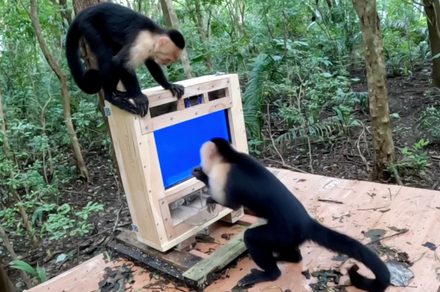
The core of this research is a specialized, portable station dubbed “CapuchinAI.” Rather than forcing the monkeys to adapt to a lab, the lab has been brought to the forest. The system is a robust, weather-resistant wooden unit equipped with three primary components:
* Facial Recognition: Using advanced algorithms, the system identifies individual monkeys as they approach, ensuring that data is tracked accurately for each specific subject.
* Interactive Touchscreen: This serves as the cognitive testing interface, presenting the primates with various puzzles and challenges.
* Automated Reward System: A 3D-printed dispenser provides a positive reinforcement-typically a slice of dried banana-whenever a monkey successfully completes a task.
Why This Matters for Behavioral Biology
This approach represents a significant leap forward in ecological research. By removing the human element from the immediate testing process, the monkeys interact with the technology on their own terms. This minimizes the “observer effect,” where animals might behave differently due to the presence of humans.
Current data suggests that these primates are remarkably adept at navigating digital interfaces, mirroring the rapid cognitive development seen in other highly intelligent species. As AI continues to evolve, these “digital field stations” could become the gold standard for studying wildlife, providing a non-invasive window into the minds of animals that were previously difficult to monitor.
According to the study, this technology is not just a novelty; it is a vital tool for understanding the evolutionary roots of intelligence.