





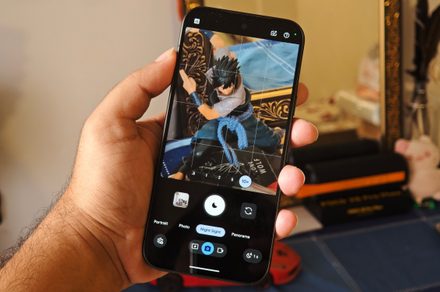
The Evolution of Low-Light Photography: Why Night Sight Feels Invisible Again
When Google first introduced Night Sight, it felt like a parlor trick that defied the laws of physics. You could aim a Pixel at a near-pitch-black environment, wait a few seconds, and watch as the software reconstructed a vibrant, clear image from what appeared to be nothing but shadows. It was the gold standard of computational photography, turning smartphone sensors into tools capable of capturing the impossible.
Fast forward nearly a decade, and the landscape has shifted dramatically. Low-light processing is no longer a niche capability; it is a baseline expectation. Whether you are using a top-tier Samsung, an iPhone, or a mid-range device, modern hardware relies on multi-frame exposure stacking to salvage dark shots. Because this technology has become so ubiquitous, the “wow” factor has largely evaporated. However, the Pixel 11 Pro has managed to reignite my interest by making the process feel entirely effortless.
Instant Night Sight: Speed Over Spectacle
Google’s latest iteration, dubbed “Instant Night Sight,” promises capture speeds up to 4.5 times faster than previous generations. While marketing departments often inflate these figures, my time with the Pixel 11 Pro suggests this claim is grounded in reality.
In the past, using Night Sight required a level of patience-you had to hold the phone steady, bracing yourself while the software worked its heavy lifting. Now, the shutter lag is so minimal that the distinction between a standard photo and a Night Sight capture has effectively vanished. The process is so fluid that I often find myself snapping photos in dim environments without even realizing the specialized mode has engaged. It has transitioned from a deliberate “mode” you select to a background utility that simply works.
The New Standard for Ambient Capture
The most impressive aspect of the Pixel 11 Pro is how aggressively and intelligently it deploys this feature. During my testing, I noticed the camera frequently opting for Night Sight in scenarios that wouldn’t have triggered it on older devices-such as moderately lit interiors or areas with complex artificial lighting.
Rather than forcing the user to toggle settings or wait for a progress bar, the phone handles the exposure balancing in real-time. By the time you lift your finger from the shutter button, the image is already processed and ready for social media. It is a subtle upgrade, but it is arguably the most significant one in years: it removes the friction from low-light photography, allowing the user to focus on the subject rather than the limitations of the sensor.