




## The Evolution of Nio’s Battery Swap Strategy: From Financial Gamble to Industry Standard
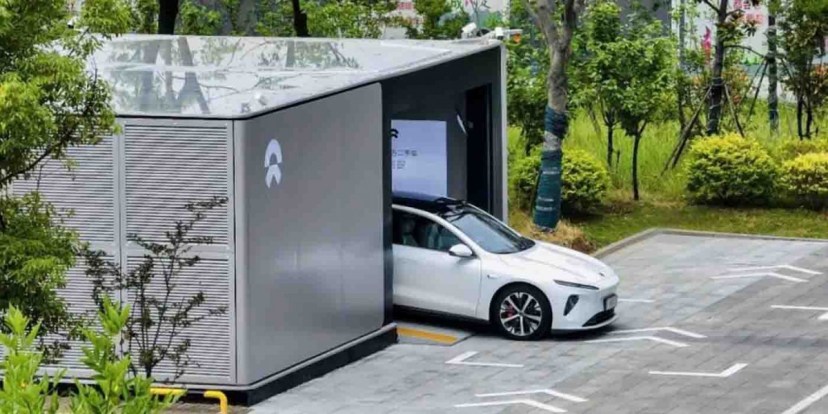
In the early days of the electric vehicle (EV) revolution, Nio’s decision to blanket China with automated battery-swapping infrastructure was widely ridiculed. Critics labeled the initiative a reckless, capital-intensive vanity project, arguing that the massive investment required to construct specialized, robotic drive-in facilities was a fiscal trap. While competitors opted for the path of least resistance-relying on the burgeoning public charging network-Nio chose the arduous route of architecting a proprietary energy ecosystem from the ground up.
### The High Cost of Innovation
The initial financial outlook for this infrastructure was daunting. Launching the first generation of swap stations required an eye-watering investment of RMB 3 million (approximately €340,000) per unit, excluding the cost of the lithium-ion battery inventory stored within. To put this in perspective, it was akin to a startup deciding to build its own private power grid rather than simply plugging into the municipal supply.
However, Nio’s engineering department treated these stations like a software product, iterating through rapid development cycles to drive down costs. By streamlining mechanical complexity and optimizing the robotic arms, the company successfully reduced the price of second-generation stations to RMB 2 million (€260,000). This trend of aggressive cost-cutting continued with the rollout of the third and fourth-generation stations, which brought the per-unit expenditure down to roughly RMB 1.5 million (€170,000).
### A Shift in Market Perception
What was once viewed as a “money-burning” liability has transformed into a strategic asset. Today, the industry is beginning to recognize the value of this “Battery-as-a-Service” (BaaS) model. By decoupling the battery from the vehicle, Nio has effectively lowered the entry price for consumers while solving the “range anxiety” dilemma that plagues traditional plug-in EVs.
Recent data suggests that the efficiency of these stations has reached a tipping point. With thousands of stations now operational across China and a growing footprint in Europe, the network is no longer just a convenience-it is a competitive moat. The ability to provide a “full tank” in under five minutes has proven to be a significant differentiator in a crowded EV market, forcing legacy automakers to reconsider their own charging strategies.