




The Evolution of Surrealist Satire: Why ‘Buddy’ is the Spiritual Heir to ‘Too Many Cooks’
Mark your calendars: Buddy is officially slated to hit the big screen on Friday, August 28.
A Legacy of Unsettling Television
Looking back at the cultural landscape of 2014, the surprise midnight debut of Too Many Cooks remains a watershed moment in experimental television. Without any promotional buildup, director Casper Kelly delivered an 11-minute masterpiece that began as a nostalgic parody of classic sitcom title sequences before spiraling into a meta-fictional, surrealist fever dream. While Kelly’s 2021 project, the “Adult Swim Yule Log,” toyed with similar bait-and-switch tactics, his latest feature, Buddy, serves as the definitive spiritual successor to that viral sensation. By adopting the wholesome, sugary aesthetic of a vintage children’s educational program-reminiscent of the colorful, moralistic tone of Barney & Friends-the film masterfully weaponizes nostalgia to facilitate a sharp, calculated plunge into psychological chaos.
Deconstructing the Children’s Programming Trope
The film’s commitment to its premise is immediate and immersive. Even before the opening theme song concludes, the viewer is transported back to the 1990s through a tight 4:3 aspect ratio and the distinct, flat lighting characteristic of traditional soundstage productions. This aesthetic precision creates a comforting, familiar container for the madness that follows.
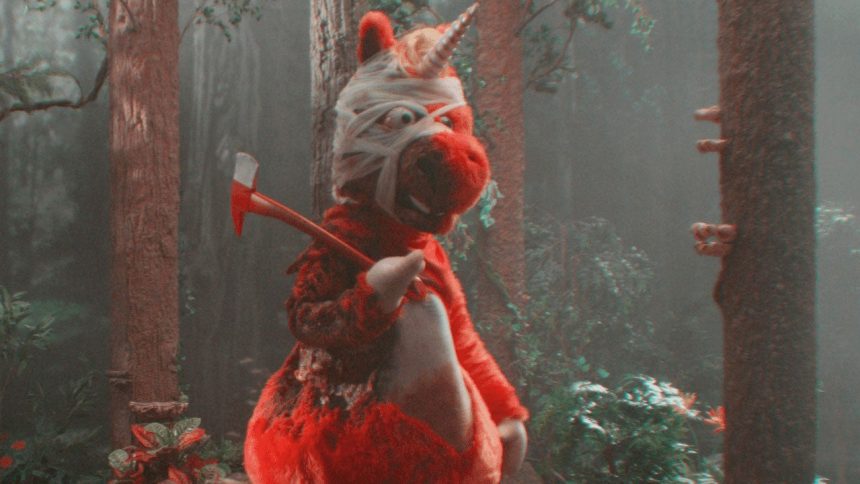
At the center of this vibrant, artificial world is Buddy the Unicorn, brought to life by the voice talents of Keegan-Michael Key. Buddy serves as the quintessential mascot, radiating a dim-witted, relentless optimism as he interacts with the children at the clubhouse. Surrounded by a cast of anthropomorphized sidekicks, the character embodies the saccharine tropes of the genre, setting the stage for a narrative that is as unsettling as it is inventive.