





### A Voyage into the Living Laboratory: Redefining the Expedition Experience
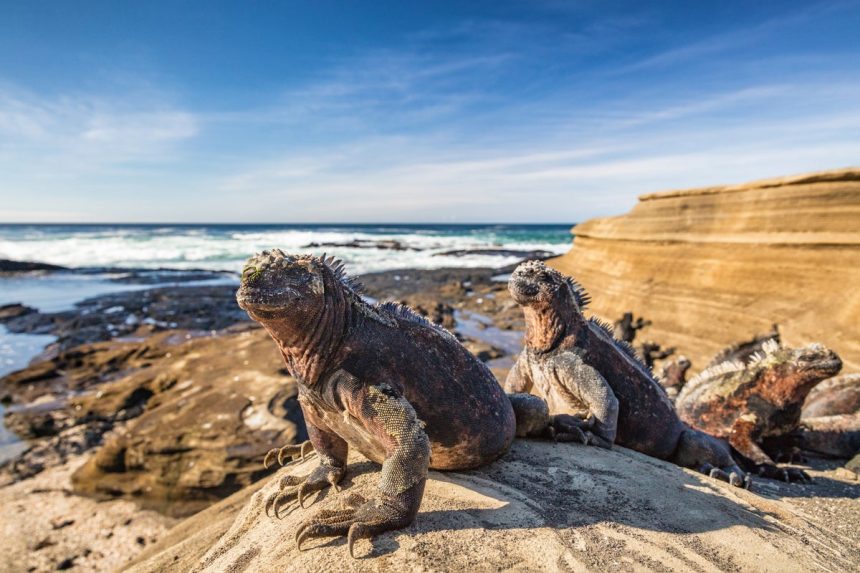
The morning sun in Ecuador casts a golden hue over the water as my kayak glides toward a jagged shoreline. Ahead, two penguins perch stoically on the volcanic rock. I brace for a collision, my paddle acting as a makeshift buffer, fearing the harsh scrape of plastic against stone will send them diving for safety. Instead, they remain unmoved, barely acknowledging my presence. This is the surreal reality of the Galapagos Islands-a place where the boundary between human and wildlife seems to dissolve.
#### Darwin’s Living Legacy
In most parts of the world, such proximity to wild animals would trigger an immediate flight response. Yet, during a four-night expedition aboard the *National Geographic Islander II*, the unique temperament of the local fauna becomes clear. It is easy to see why Charles Darwin famously characterized this archipelago as a “little world within itself.” The lack of natural predators on these islands has fostered an environment of profound fearlessness, allowing visitors to observe evolutionary history in real-time.
#### Beyond the Traditional Cruise Model
If you are expecting the glitz and standardized routine of typical cruises, prepare for a paradigm shift. This is not a vacation defined by massive terminals or crowded boarding queues. The journey begins with a flight from Quito, the high-altitude capital of Ecuador, landing directly on Baltra Island. From there, the transition to the ship is seamless; a small zodiac boat ferries you from the arid, sun-baked runway directly to the deck of the vessel.
*National Geographic Islander II rests in the calm Galapagos waters (Marc Shoffman)*
#### An Atmosphere of Unrestricted Trust
The most striking departure from conventional travel is the culture of the ship itself. Upon arrival, you realize there are no room keys. This small detail speaks volumes about the ethos of the expedition: it is an immersive, communal experience built on trust and a shared sense of discovery.
While mass-market cruise lines often focus on onboard entertainment, the Galapagos experience prioritizes the environment. Recent data from the Galapagos National Park Directorate highlights that tourism remains a vital tool for conservation, provided it is managed through small-scale, educational expeditions like these. By limiting group sizes and focusing on expert-led exploration, travelers gain a deeper understanding of the fragile ecosystems that continue to shape our scientific understanding of life on Earth.