



When you purchase through links in our articles, we may earn a small commission. This doesn’t affect our editorial independence.
The AI Dilemma: Are We Still Playing the Developer’s Vision?
As artificial intelligence becomes the backbone of modern graphics rendering, a fundamental question emerges: does the game you see on your screen reflect the creator’s vision, or is it merely an AI-interpreted approximation? With the arrival of Nvidia’s DLSS 5, the line between native rendering and machine-generated imagery has blurred significantly, particularly in visually demanding titles like NBA 2K27.
The Evolution of Upscaling and Visual Fidelity
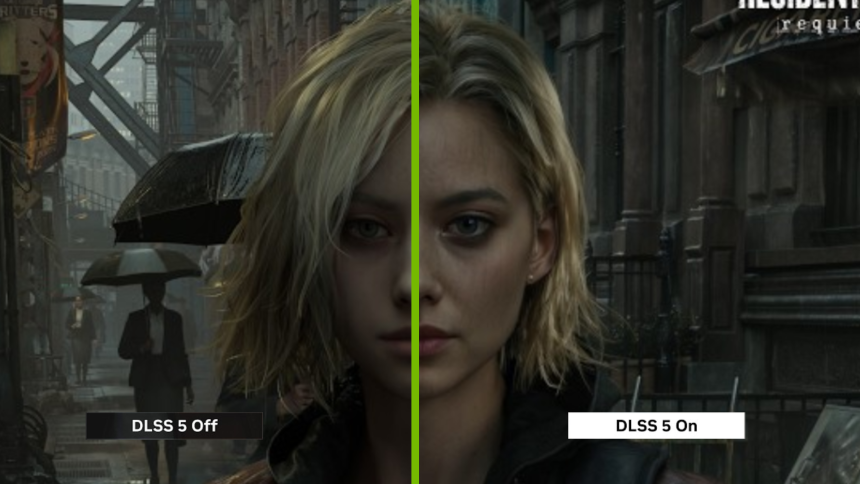
DLSS 5 represents a massive leap in real-time upscaling. By leveraging sophisticated neural networks, the technology reconstructs frames to deliver high-fidelity visuals that were previously impossible on mid-range hardware. However, this efficiency comes with a philosophical trade-off. While the image quality is undeniably impressive-often appearing sharper than native resolution-it introduces “hallucinated” pixels that the original game engine never explicitly rendered.
Consider the analogy of a digital restoration of a classic film: while the AI might clean up the grain and sharpen the edges, it risks altering the director’s original color grading or texture choices. In gaming, this has led to a growing movement of enthusiasts requesting a “Developer Intended” toggle. Such a feature would allow players to bypass AI enhancements, ensuring they experience the game’s lighting, shadows, and textures exactly as the studio’s art team finalized them.
Why AI Upscaling is Becoming Industry Standard
The push toward AI-driven graphics is largely a response to the skyrocketing costs of hardware. With high-end GPUs now frequently exceeding the $1,000 mark, developers are under immense pressure to optimize games for a wider range of systems. According to recent industry data, over 60% of modern AAA titles now ship with some form of upscaling technology enabled by default, as it allows for stable frame rates at 4K resolutions that would otherwise be unattainable for the average consumer.
Despite the performance benefits, the debate regarding visual accuracy remains polarized. Purists argue that AI upscaling can introduce subtle artifacts-such as ghosting or shimmering-that detract from the intended atmosphere. Conversely, proponents highlight that without these algorithms, many modern games would be unplayable for the vast majority of the PC gaming community.
Finding the Balance Between Performance and Purity
Ultimately, the industry is at a crossroads. As we move toward a future where AI is integrated into every layer of the rendering pipeline, the goal should be transparency. Providing players with the agency to choose between “AI-Enhanced” and “Native/Developer-Intended” modes could bridge the gap between technical necessity and artistic integrity. Until then, players must decide for themselves: is the performance boost worth the loss of the developer’s raw, unadulterated vision?