



![How Star Wars’ Admiral Hux Actor Really Feels About His Death In The Rise Of Skywalker [Exclusive]](https://www.mixtv1.com/wp-content/uploads/2026/09/28515-attachment-860x483.jpg)
Lucasfilm
The Legacy of General Hux in the Sequel Era
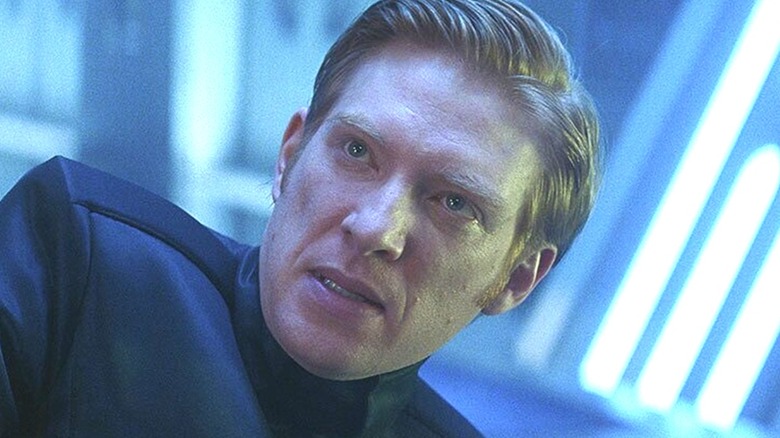
While the “Star Wars” sequel trilogy continues to spark heated debates within the fandom, its cultural footprint is undeniable. These films expanded the lore of the galaxy in profound ways, introducing complex figures like General Hux. Portrayed by Domhnall Gleeson, Hux occupies a unique space in the franchise; he is frequently cited as one of the least powerful “Star Wars” villains, often overshadowed by the raw Force-wielding capabilities of his peers.
A Paradoxical Villain: From Starkiller to Spy
Despite his lack of Force sensitivity, Hux’s impact on the galaxy was catastrophic. In “The Force Awakens,” he oversaw the operation of Starkiller Base, a weapon capable of destroying entire star systems. This act of planetary genocide cements his status as one of the deadliest “Star Wars” characters of all time, having claimed more lives in a single strike than perhaps any other antagonist in the series. To put this in perspective, the destruction of the Hosnian system resulted in the immediate loss of billions of lives, a scale of devastation that dwarfs the original Death Star’s impact.
Reflecting on a Sudden Exit
Every villain’s journey must eventually reach its conclusion, and for Hux, that end arrived in the 2019 finale, “The Rise of Skywalker.” His arc took a surprising turn when he was revealed as a mole for the Resistance, driven by his bitter rivalry with Kylo Ren. However, his betrayal was short-lived; he was swiftly executed by General Pryde, played by Richard E. Grant, in a moment that felt abrupt to many viewers. Given the character’s massive influence on the plot, fans have long wondered: what is Domhnall Gleeson’s perspective on the way his character was written out of the saga?