



Transforming Education Through Spatial Computing
When developers prioritize wonder and exploration over rigid instruction, spatial applications transcend the traditional “classroom” feel, evolving into deeply immersive journeys. By shifting the focus from rote memorization to organic discovery, these tools turn passive learning into an active, engaging experience.
The Gold Standard: Museas and Astronoma
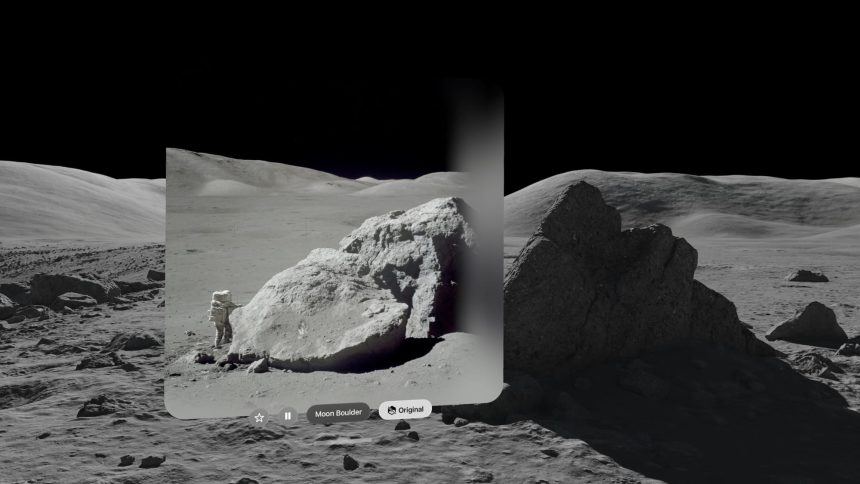
The Museas and Astronoma applications, both built for the Apple Vision Pro, serve as premier benchmarks for this design philosophy. Crafted by Miguel Garcia Gonzalez, the visionary behind Augmenos, these apps demonstrate how spatial computing can bridge the gap between complex data and user accessibility.
While Museas invites users to curate a private gallery of historical masterpieces within their own living rooms, Astronoma provides a high-fidelity window into the cosmos. Both platforms leverage authentic, verified data to build environments that reward repeat engagement. As the spatial computing market continues to grow-with projections suggesting the industry could reach a valuation of over $400 billion by 2030-apps that prioritize high-quality, evolving content are poised to lead the sector.
Designing for the Inquisitive Mind
During my discussion with Gonzalez regarding the architecture of immersive edutainment, a few core principles stood out. The primary takeaway is that the most effective educational experiences are those that treat the user’s curiosity as the primary engine for progress.
Prioritizing Inquiry Over Instruction
Gonzalez emphasizes that the barrier to entry for new subjects is often psychological. When a user feels they are being “taught,” the experience can feel like a chore. However, by framing information as a mystery to be solved or a landscape to be traversed, the cognitive load is reduced. Instead of presenting a lecture, these apps present a playground. By allowing users to navigate at their own pace, the learning process becomes a byproduct of their own interest rather than a forced curriculum.