




GM’s Software Strategy: Clarifying the Confusion Over Phone Projection
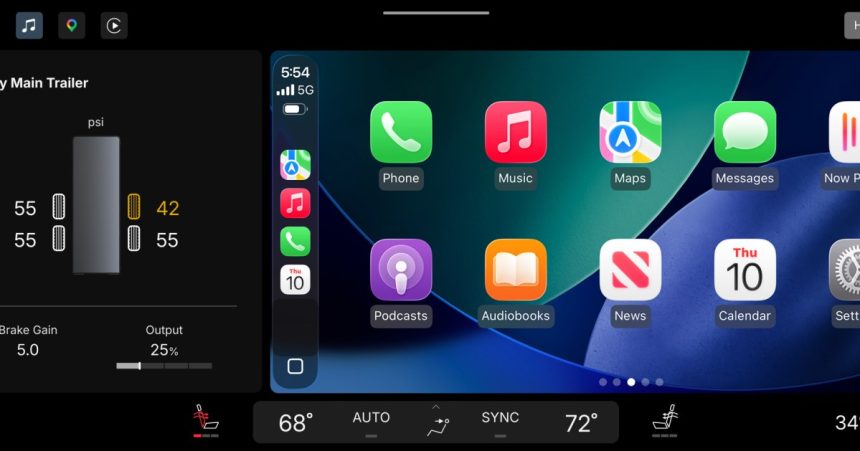
General Motors recently unveiled a revamped digital interface for its upcoming internal combustion engine (ICE) trucks, specifically the Chevy Silverado and GMC Sierra. This announcement sparked a flurry of headlines suggesting that the automotive giant was reversing its controversial 2023 decision to phase out Apple CarPlay and Android Auto. However, the reality of the situation is far more nuanced than a simple “about-face.”
The Misconception of a Policy Reversal
Following the announcement, outlets like *Yahoo Finance* framed the move as a capitulation to consumer demand, while *Apple Insider* suggested GM had “caved” regarding its stance on phone mirroring. These interpretations created significant buzz, leaving many drivers wondering if their future electric vehicles (EVs) would regain the smartphone integration they’ve been missing.
To be clear: GM has not changed its long-term strategy for its electric fleet. The confusion stems from a misunderstanding of the distinction between GM’s gas-powered lineup and its growing EV portfolio.
The EV Divide: Why Phone Mirroring Remains Absent
For the past three years, GM has maintained a strict policy of excluding Apple CarPlay and Android Auto from its electric vehicles. This exclusion is not a technical limitation but a strategic choice to prioritize a proprietary, Google-integrated ecosystem.
Currently, the following models are built without native phone projection support:
- Chevrolet: Equinox EV, Blazer EV, Bolt EV, and Silverado EV
- Cadillac: Lyriq, Optiq, Vistiq, and Escalade IQ
- GMC: Sierra EV and Hummer EV (both SUV and Truck variants)
In these vehicles, the infotainment experience is powered entirely by embedded Google software. By controlling the entire software stack, GM aims to collect deeper vehicle data and create a more seamless integration between the car’s battery management system and navigation-a feat that is more difficult to achieve when relying on third-party mirroring software.
Market Context and Consumer Sentiment
The pushback against GM’s decision is rooted in the high adoption rates of smartphone mirroring. According to recent industry data, over 80% of new car buyers in the U.S. consider Apple CarPlay or Android Auto a “must-have” feature. By removing these options, GM is essentially betting that its native Google-based interface will eventually offer a superior user experience that outweighs the convenience of familiar phone apps.
While the new software look for the Silverado and Sierra gas trucks provides a modern aesthetic, it serves as a reminder that GM is bifurcating its product strategy: keeping the familiar phone-mirroring experience for traditional truck buyers while pushing a “walled garden” software approach for its electric future.

![[WATCH] Armin van Buuren Maps the Psychology of the Dancefloor Across a Five Hour Set at UNVRS](https://www.mixtv1.com/wp-content/uploads/2026/09/34232-attachment.jpg)