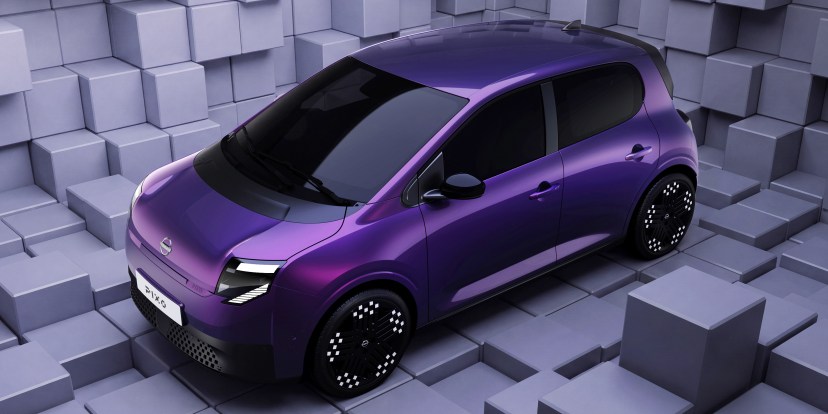





The Nissan Pixo Returns: A Modern Electric Transformation
Cast your mind back to 2009, and you might recall the original Nissan Pixo. It was a utilitarian, no-frills city car-essentially a rebadged Suzuki Alto manufactured in India. With its modest 1.0-liter three-cylinder engine, it served as the automotive equivalent of a toaster: functional, affordable, and entirely devoid of personality. It was built for one purpose only: moving people from one location to another with minimal financial impact. After a quiet exit from the European market over a decade ago, the Pixo nameplate is making a surprising comeback, shedding its budget-appliance image for a sophisticated, all-electric future.
From Budget Box to Urban EV
Nissan is moving away from the “bare-bones” philosophy of the past, repositioning the Pixo as a contemporary A-segment electric vehicle. While the brand is busy promoting “Mobility Intelligence for Everyday Life,” the reality is far more pragmatic and exciting. The new Pixo is a strategic sibling to the upcoming Renault Twingo. By sharing the same architecture and production facilities at Renault’s Revoz factory in Novo Mesto, Nissan is leveraging economies of scale to make electric mobility more accessible.
Why the Rebirth Matters
The shift toward compact electric vehicles is more critical now than ever. With urban congestion rising and European cities implementing stricter Low Emission Zones (LEZs), the demand for small, agile, and zero-emission transport is surging. Recent industry data suggests that the A-segment EV market is poised for significant growth, as manufacturers look to replace aging internal combustion city cars with affordable battery-electric alternatives. By utilizing the Twingo platform, the reborn Pixo is positioned to be a highly competitive player in the race to electrify the daily commute, offering a blend of French engineering and Japanese brand heritage that the original model simply couldn’t provide.