





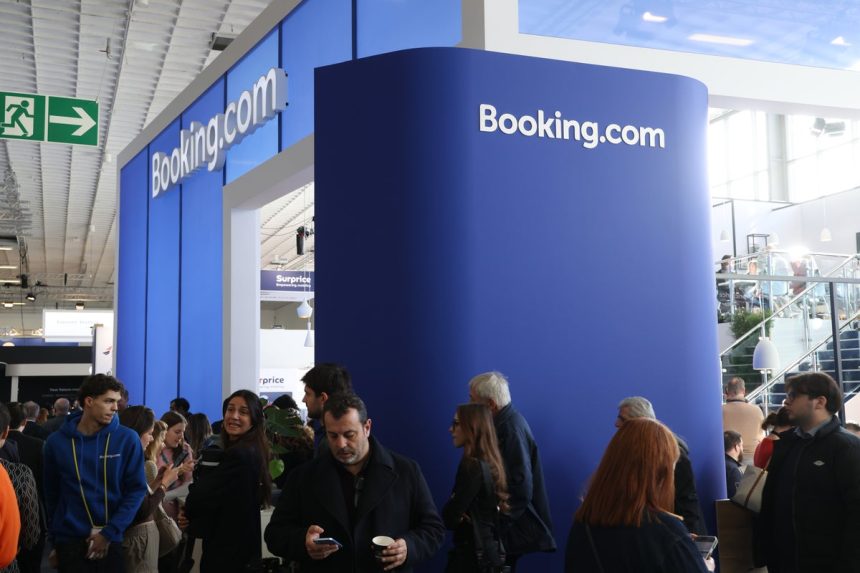
Security Concerns Mount Over Fake Listings on Booking.com
Travelers are increasingly falling victim to sophisticated scams on Booking.com, as the platform faces intense scrutiny for its inability to vet fraudulent property advertisements. Recent investigations reveal that scammers are successfully listing non-existent accommodations, leading unsuspecting tourists to arrive at public venues rather than their booked lodgings.
The Reality of “Ghost” Accommodations
The scale of the issue is significant. Staff at The Liberty Bounds, a Wetherspoons pub situated near Tower Bridge, have reported turning away as many as 20 disappointed travelers every single day. These victims had arrived expecting a “luxury apartment” experience, only to find themselves standing in a busy pub.
The consumer advocacy group Which? recently exposed the platform’s systemic vulnerabilities by successfully creating a fraudulent listing for 10 Downing Street. This experiment underscored how easily bad actors can bypass security protocols to post fake properties, a problem that has become increasingly prevalent in the digital travel marketplace.
A Case Study in Customer Service Failure
The human cost of these security lapses is exemplified by the experience of Paul Dawson. In August, the 55-year-old traveler from Loughborough paid £73 for a family stay at “The London Crown” apartments. Shortly after the booking, he received a suspicious message containing a link to a phishing site designed to harvest his banking credentials.
When Mr. Dawson contacted the platform to report that the address provided was actually a pub, the response was dismissive. Support staff insisted he travel to the location and wait until after 7:00 PM before they would consider offering relocation assistance.
“I explained to the support staff that I had autistic children and the idea of turning up at a clearly non-existent property at 10.30pm would have been catastrophic,” Mr. Dawson noted. His experience highlights a growing disconnect between the platform’s automated systems and the real-world safety of its users.
Industry-Wide Vulnerabilities
While Booking.com remains a dominant force in the travel industry, the rise of AI-generated content and sophisticated phishing tactics has made it easier for criminals to mimic legitimate business profiles. Industry experts suggest that platforms must implement more rigorous verification processes, such as mandatory physical address validation or multi-factor authentication for property hosts, to prevent these “ghost” listings from proliferating. Until such measures are enforced, travelers are advised to exercise extreme caution, verify property addresses via independent mapping services, and avoid clicking external links sent through messaging platforms.