




Just Hoops 2.0: Elevating VR Basketball Through Hand Tracking
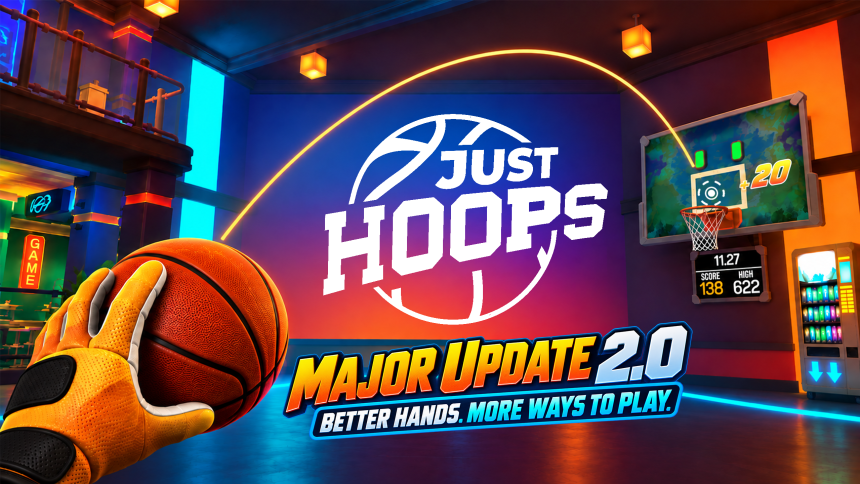
In a significant move coinciding with this week’s Meta Connect event, the developers at Realcast have officially launched the 2.0 update for their premier basketball simulation, Just Hoops. This major overhaul prioritizes intuitive hand tracking, aiming to lower the barrier to entry and provide a more fluid, immersive experience for virtual court enthusiasts.
A Strategic Shift Toward Controller-Free Play
The evolution of Just Hoops is the result of twelve months of intensive development. Realcast leaned heavily on community-driven insights to refine the gameplay loop, ensuring that the mechanics feel natural rather than forced. This pivot toward gesture-based interaction aligns perfectly with Meta’s broader hardware roadmap. With the recent unveiling of the controller-free Meta VR Glasses, it is clear that Meta is incentivizing developers to move away from traditional handheld peripherals in favor of natural hand-tracking interfaces.
While the update marks a milestone for the Meta ecosystem, the status of these features for Steam-based players remains unconfirmed. As of now, there is no official word on whether the PC VR version will receive parity with these new accessibility and tracking enhancements.
Enhanced Mechanics and Accessibility
The core philosophy behind the 2.0 update is the removal of friction. By utilizing advanced hand-tracking algorithms, players can now mimic the physical motion of shooting a basketball with greater precision. Think of it like transitioning from using a mouse to draw on a computer to using a high-end stylus; the tactile connection between the user’s intent and the digital output is significantly tightened.
This update is particularly timely, as recent industry data suggests that VR engagement increases by nearly 40% when users are not required to manage physical controllers, which can often break immersion during fast-paced sports simulations. By stripping away the hardware, Just Hoops is positioning itself as a leader in the next generation of accessible VR athletics.