



Moca Chain Mainnet: Powering the Future of Decentralized Identity and AI Transactions
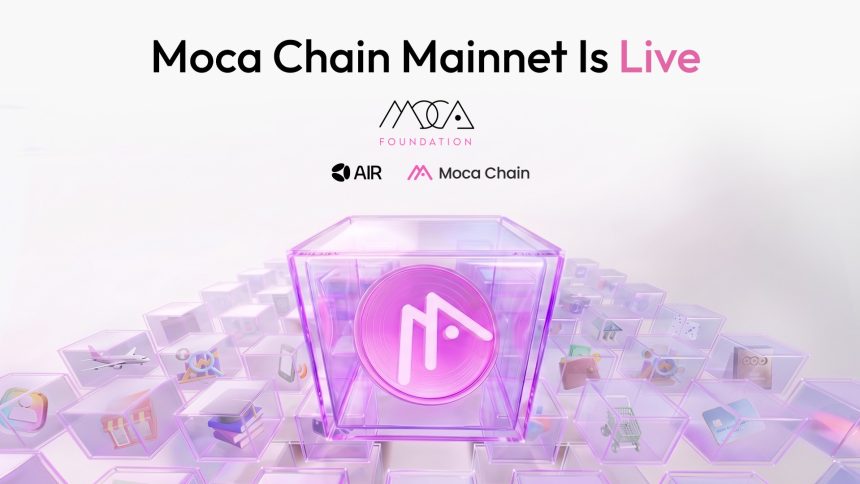
Animoca Brands’ identity-focused ecosystem, Moca Network, has officially transitioned into a new era with the launch of the Moca Chain mainnet. This strategic deployment marks a significant milestone, establishing a robust Layer 1 infrastructure designed to facilitate seamless digital credentialing, streamlined payment processing, and the eventual integration of autonomous AI-driven transactions.
A New Layer 1 Foundation for Web3
Unveiled on September 29th, Moca Chain (EVM chain ID 2288) is engineered for high compatibility, offering full support for standard Ethereum development tools. By utilizing the MOCA token as the primary utility asset for both governance and network transaction fees, the chain creates a unified economic environment.
Beyond simple asset transfers, the network serves as a shared infrastructure layer where enterprises can issue, manage, and revoke digital credentials. Notably, the platform integrates zero-knowledge (ZK) proof technology from day one, ensuring that privacy remains a core pillar of the network’s architecture.
Redefining User Verification and Privacy
The core value proposition of Moca Chain lies in its ability to simplify complex verification processes. Rather than forcing users to repeatedly share sensitive personal data, the network enables a “verify once, use anywhere” model.
Consider the current friction in digital services: today, a user might need to upload a passport scan to five different platforms to prove their identity. With Moca Chain, a business can verify a user’s age or membership status once and issue a cryptographically secure credential. With the user’s explicit permission, other participating services can instantly confirm that specific fact-such as “user is over 18”-without ever needing to access or store the underlying identity documents.
Beyond Identity: Gaming and AI Integration
The utility of these credentials extends far beyond basic KYC (Know Your Customer) procedures. These digital attestations can represent:
* Gaming Milestones: Proving a player has achieved a specific rank or completed a rare quest across different titles.
* Loyalty Programs: Verifying membership tiers across various partner brands without manual account linking.
* AI Agent Autonomy: As the industry moves toward AI-driven commerce, these credentials will allow autonomous agents to prove they have the necessary permissions or funds to execute transactions on behalf of a user, creating a secure bridge between human intent and machine execution.
As the ecosystem matures, the ability to verify credentials on-chain will likely become a standard requirement for decentralized applications, reducing fraud while significantly improving the user experience.