






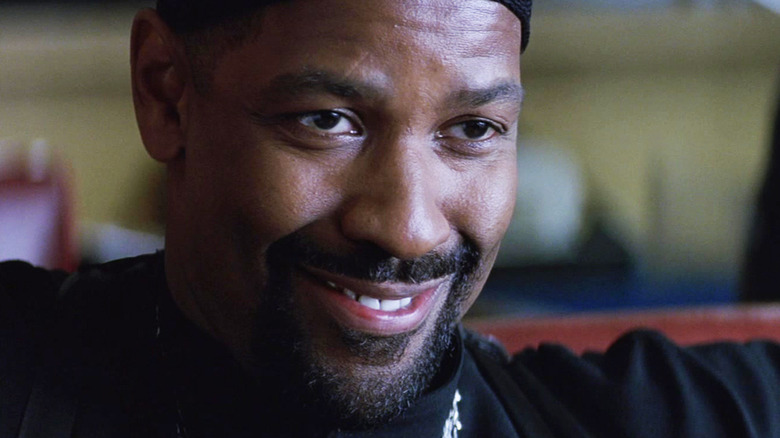
Warner Bros.
A Quarter-Century of Cinematic Villainy: Why Alonzo Harris Remains Denzel’s Peak
For over four decades, Denzel Washington has maintained a level of consistency that few actors in Hollywood history can claim. Because his career spans so many eras, his “definitive” role often depends on when a viewer first discovered his work. However, for those who were watching the silver screen at the turn of the millennium, Antoine Fuqua’s Training Day-which premiered on October 5, 2001-stands as the definitive touchstone. While Washington has headlined countless blockbusters, his Academy Award-winning turn as the morally bankrupt LAPD narcotics detective Alonzo Harris is widely considered the pinnacle of his craft.
Breaking the Mold: The Risk of Playing the Antagonist
It is difficult to imagine today, given his later roles in films like The Equalizer or American Gangster, but there was a time when the public struggled to envision Washington as a true antagonist. Throughout the 1990s, he was largely cemented in the public consciousness as the virtuous hero-the man of integrity and unwavering moral fiber. Consequently, when news broke that he would be stepping into the shoes of a corrupt, manipulative police officer, it triggered a significant industry debate. Many critics and fans alike questioned whether the audience would accept their beloved leading man in such a dark, irredeemable light.
The Legacy of a Genre-Defining Performance
The skepticism surrounding his casting only served to make the final result more impactful. By subverting his own “good guy” image, Washington created a character that felt dangerous, unpredictable, and terrifyingly charismatic. According to recent industry retrospectives, Training Day didn’t just earn Washington an Oscar; it fundamentally shifted the trajectory of his career, proving he could command the screen just as effectively as a villain as he could as a protagonist. Even 25 years later, the film’s influence on the crime thriller genre remains undeniable, serving as a masterclass in character transformation.