





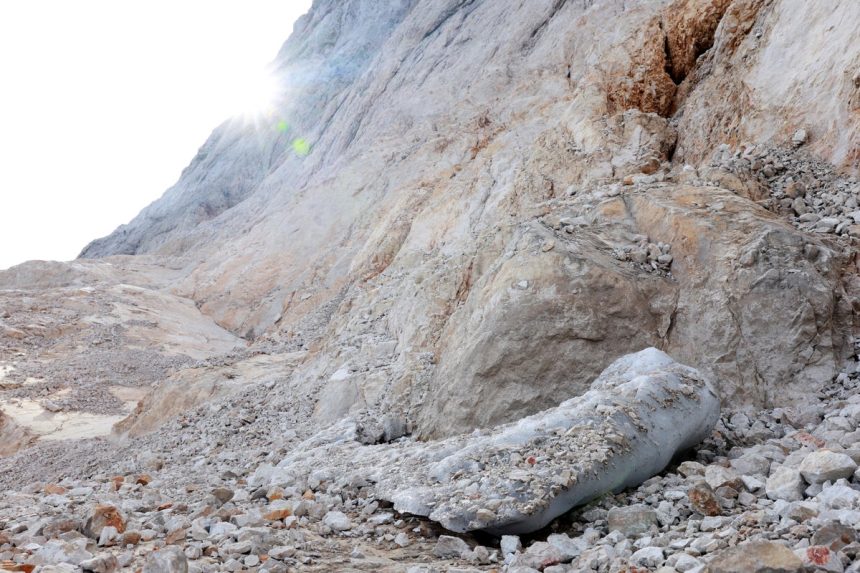
The Final Days of Slovenia’s Iconic Triglav Glacier
The Triglav glacier, a historic emblem of Slovenia’s rugged Alpine identity and a former haven for summer skiing enthusiasts, is on the brink of total extinction. Experts monitoring the site warn that the remaining patches of ice are so fragile they could vanish entirely within a matter of days.
A Vanishing National Landmark
Perched on the northeastern slopes of Mount Triglav-the nation’s highest peak, reaching an elevation of 9,395.2 feet (2,863.65 meters)-the glacier has long served as a geographical centerpiece for the country. However, its physical presence has been in a state of rapid decline for over a century.
Historical data provided by Triglav Tours reveals a stark transformation: in the late 19th century, the glacier spanned an impressive 40 hectares. By 1946, that footprint had been slashed to 14 hectares. In the modern era, the site has effectively lost its status as an active glacier, as the accumulation of new ice has completely ceased, leaving the remaining mass to succumb to the warming climate.
Expert Observations on the Climate Crisis
The rapid degradation of this glacier is a direct consequence of accelerating climate change. Miha Pavšek, a researcher at the Anton Melik Geographical Institute, part of the Slovenian Academy of Sciences and Arts, has spent three decades documenting the site’s decline.
“All available evidence points to the fact that the final remnants of ice will disappear within the next few days,” Pavšek noted. Having personally tracked the glacier’s retreat for 30 years, he describes the current situation as the conclusion of a long-term environmental shift. “It appears that this significant monitoring project, at least concerning the ice beneath Triglav, will reach its end this year.”
Broader Environmental Context
The loss of the Triglav glacier mirrors a global trend of retreating ice caps. According to the World Glacier Monitoring Service, glaciers worldwide have lost an average of 267 gigatonnes of ice per year since the turn of the millennium. This loss contributes significantly to rising sea levels and the disruption of local ecosystems that rely on seasonal meltwater. As the Triglav glacier fades into history, it serves as a poignant reminder of the irreversible impact that rising global temperatures are having on high-altitude environments.