



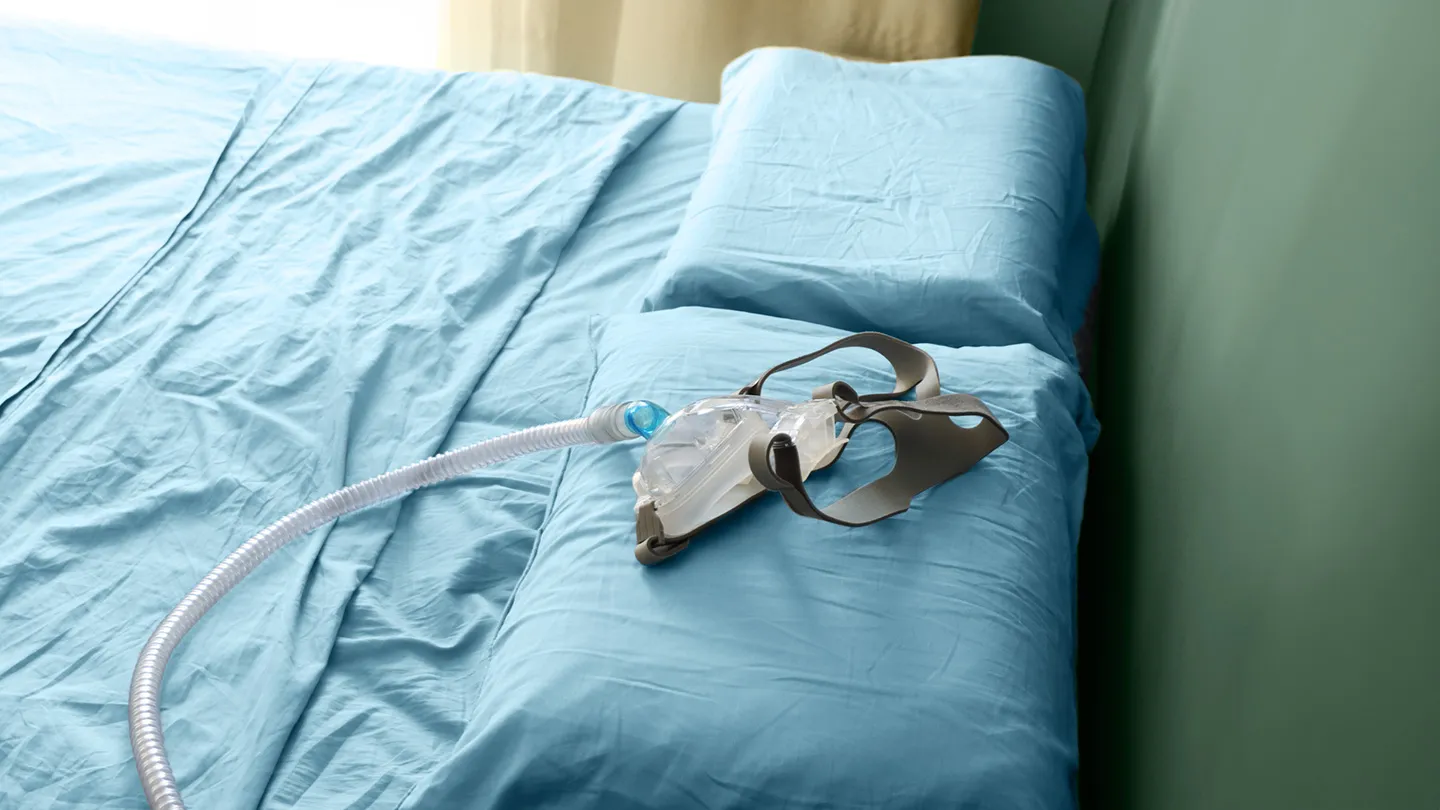

Get Screened for and Manage Sleep Apnea
Untreated sleep apnea adds real strain to an already thickened heart, says Smith. “Each pause in breathing raises pressure, triggers stress hormones that can worsen obstruction, and increases the risk of irregular heartbeats like atrial fibrillation,” he says.
Repeated drops in oxygen overnight may also contribute to scarring of the heart muscle over time. In a study of more than 200 people with obstructive HCM, sleep apnea and its severity were independently linked to greater scarring on cardiac MRI, and that scarring is associated with worse long-term outcomes.
Diagnosing and treating sleep apnea early with CPAP may help reduce that scarring and improve long-term outlook, though more research is needed.
“We know treating OSA in more general cardiology patients is very beneficial,” says Smith.
Somers and his colleagues have published research on how sleep apnea affects the body’s stress response and blood vessel function in people with HCM.