

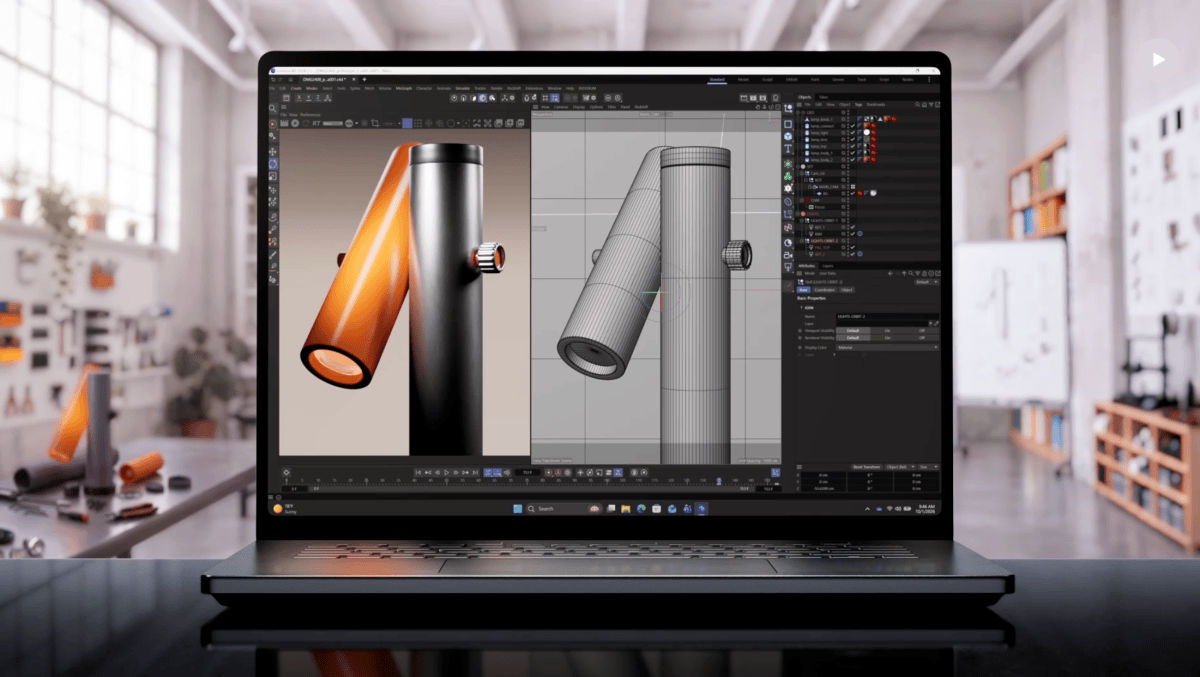




The Next Era of Local AI: Microsoft Unveils RTX Spark-Powered Hardware
Following Nvidia’s June announcement regarding partnerships with major PC manufacturers to integrate the RTX Spark chip into Windows-based AI and agent-ready systems, the industry has been waiting for concrete details. That silence ended this Wednesday at a San Francisco Tech Week event, where Microsoft finally pulled back the curtain on the hardware specifications and pricing for its latest AI-centric lineup.
Introducing the Surface Laptop Ultra
Microsoft’s flagship consumer offering, the Surface Laptop Ultra, is positioned as a premium gateway into local AI processing. The device is available in two primary configurations:
* Entry-level model: Starting at $2,600.
* High-performance model: Starting at $3,700, featuring an upgraded RTX Spark chip.
For power users requiring maximum overhead, the price tag can climb as high as $5,900 when fully maxed out with expanded RAM and storage. Notably, the demand for these high-end units has been immediate, with Microsoft confirming that the top-tier configuration is already sold out.
The Surface RTX Spark Dev Box: A New Standard for Developers
Beyond consumer laptops, Microsoft is targeting the professional development community with the Surface RTX Spark Dev Box. Starting at $6,000, this workstation is purpose-built for heavy-duty AI development. It comes pre-loaded with a robust suite of Microsoft’s essential developer tools, including:
* GitHub Copilot CLI
* VS Code
* PowerShell 7
* Windows Subsystem for Linux (WSL)
Why Local AI Matters
The core value proposition for both the Surface Laptop Ultra and the Dev Box is the shift toward on-device AI execution. By leveraging the RTX Spark chip, these machines bypass the need for cloud-based processing, allowing users to run complex AI models locally without subscription fees or latency issues.
To support this, Microsoft has overhauled the internal architecture of these devices. Beyond the raw power of the GPU and CPU, the systems feature unified memory architectures and advanced thermal management solutions. These cooling enhancements are critical, as running large language models (LLMs) locally generates significant heat-a challenge similar to how high-end gaming rigs require specialized liquid cooling to maintain peak performance during intensive rendering tasks.
As the industry moves toward “agentic” computing-where AI agents perform multi-step tasks autonomously-having the hardware to handle these workloads locally is becoming a necessity rather than a luxury. With these new releases, Microsoft is betting that developers and power users are ready to invest in the hardware required to keep their AI workflows private, fast, and entirely offline.