

![Project Hail Mary’s Rocky Actor Points Out A Subtle Detail You May Have Missed [Exclusive]](https://www.mixtv1.com/wp-content/uploads/2026/10/41184-attachment.jpg)


The Reality of Nintendo’s User-Replaceable Batteries: What You Need to Know
While the prospect of swapping out a dying battery in your gaming console sounds like a consumer-friendly dream, the practical execution for the upcoming Switch 2 tells a more complicated story. Nintendo of Europe has officially unveiled the process for these replaceable units, and it is clear that “user-friendly” does not necessarily mean “easy.”
Compliance Meets Hardware Compromise
This shift in design is a direct response to stringent European Union regulations mandating that portable electronic devices must feature batteries that are accessible and replaceable by the end user. To meet these legal requirements, Nintendo has had to make specific engineering trade-offs. Reports indicate that these compliant models will carry a slight weight penalty compared to their non-replaceable counterparts, and users should expect a marginal reduction in overall battery capacity to accommodate the necessary housing and connectors.
A Peek Inside the Switch 2 Maintenance Process
Recent documentation from the FCC suggests that these hardware adjustments won’t be limited to the European market; it is highly likely that North American consumers will see similar controller and console configurations. For those curious about the actual procedure, Nintendo has published a comprehensive user guide detailing the steps required to swap the power cell.
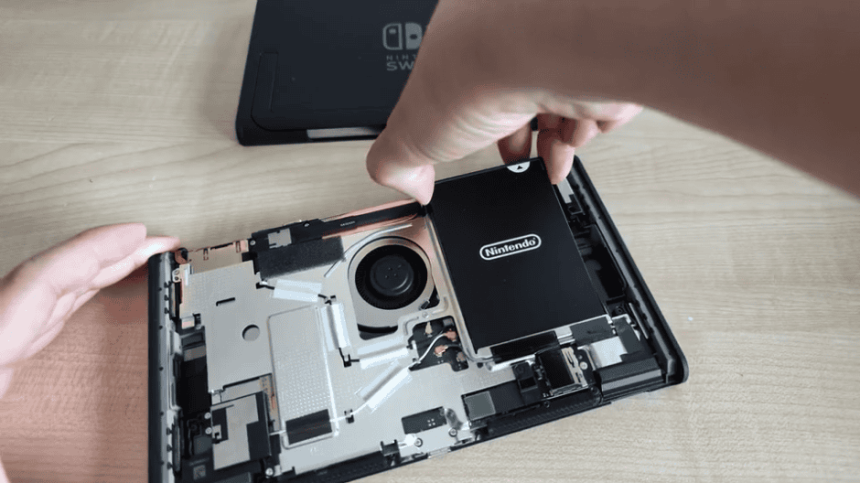
However, a quick glance at the manual reveals that this is far from a “plug-and-play” experience. To reach the battery, owners must perform a teardown that involves:
- Removing multiple external screws, including those located along the Joy-Con rail interfaces.
- Carefully prying open the chassis, which exposes sensitive internal circuitry and delicate ribbon cables.
- Navigating around internal components that are not designed for frequent user interaction.
The Risks of DIY Repairs
While the ability to replace a battery is a victory for the “Right to Repair” movement, the current design implementation carries significant risks. Unlike swapping a battery in a vintage handheld or a simple remote, the Switch 2’s internal layout leaves little room for error. One slip of a screwdriver or a static discharge could easily damage the motherboard or compromise the console’s structural integrity.
Ultimately, while Nintendo has successfully checked the box for EU compliance, they have not prioritized a seamless user experience. For the average gamer, this “feature” may be more of a last-resort necessity than a convenient maintenance task. If you aren’t comfortable performing delicate surgery on your electronics, you might still find yourself wishing for a more accessible design.