

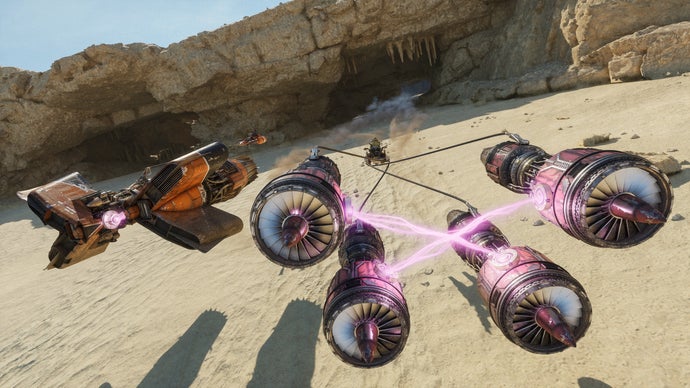



Redefining the Racing Genre: Fuse Games’ Strategic Approach to Innovation
The gaming industry often prioritizes massive scale, but Matt Webster, CEO of Fuse Games, argues that the true cost of downsizing isn’t just the human element-it’s the catastrophic loss of institutional knowledge. Retaining that expertise is far more valuable, and arguably more expensive to replace, than simply maintaining a large headcount.
Following the launch of Star Wars: Galactic Racer, which has garnered an impressive 88 Metacritic score on PS5, Webster shared his insights at the Game Republic New Horizons event. While he admits the team felt confident in their vision, he remains grounded about the unpredictability of market reception. “You never truly know how a title will resonate until it’s in the hands of the players,” he noted.
Breaking the Mold: Why Innovation Matters
While it is premature to gauge long-term commercial success-given that the game has only been available for a single weekend-Webster is encouraged by the player base’s appetite for fresh mechanics. In a genre typically defined by rigid tropes where the only objective is to cross the finish line first, Galactic Racer introduces a roguelike framework that shifts the focus.
By moving away from the “win-at-all-costs” mentality, the game creates a more nuanced experience. In this new structure, even a grueling battle for eighth place can feel like a significant victory. This departure from convention is exactly what Webster believes has set the title apart in a crowded market.
The Value of Sustainable Development
The success of the project highlights a growing trend in the industry: the shift toward smaller, more agile teams that prioritize sustainable development over bloated production cycles. By keeping the core team lean, Fuse Games has managed to maintain a cohesive creative vision while avoiding the common pitfalls of large-scale studio management.
This philosophy mirrors broader industry shifts, where developers are increasingly looking for ways to maintain quality without the burnout associated with massive, multi-year projects. As noted in recent industry analysis, the ability to iterate quickly-much like the roguelike elements found in Galactic Racer-is becoming a competitive advantage for independent studios looking to disrupt established franchises.
Reflecting on the game’s impact, Webster pointed to personal anecdotes, such as those shared by journalists like Stephen Totilo, who highlighted the joy of experiencing the game’s unique mechanics alongside family members. It is this human connection, fostered by thoughtful design rather than sheer graphical power, that defines the studio’s current trajectory.