


## Elevating Horizon OS: Meta’s New Toolkit for Spatial Computing
At the 2026 Meta Connect event, the company unveiled a suite of advanced SDKs and feature sets aimed at pushing the boundaries of spatial application development. This strategic pivot underscores Meta’s commitment to evolving beyond traditional virtual reality, positioning its ecosystem for the upcoming launch of Meta VR Glasses.
### Breaking the 2D Barrier
For years, the Horizon OS environment constrained developers to a “tablet-first” design philosophy. While users could manage multiple windows simultaneously, these interfaces remained strictly two-dimensional. Previously, if a developer wanted to incorporate dynamic, floating, or depth-aware UI elements, they were forced to transition the entire application into a fully immersive VR mode using the Spatial SDK. This created a rigid divide between standard app usage and immersive experiences.
### Introducing the Meta VR Layout SDK
The introduction of the Meta VR Layout SDK marks a significant departure from these limitations. By allowing developers to blend spatial UI components directly into standard 2D windows, Meta is enabling a more fluid, “mixed-reality” interface.
This evolution is critical as the industry shifts toward spatial computing. Recent market data suggests that user engagement with spatial interfaces increases by nearly 40% when UI elements feel physically integrated into the user’s environment rather than floating as static, flat planes.
### Real-World Application: The NBA Experience
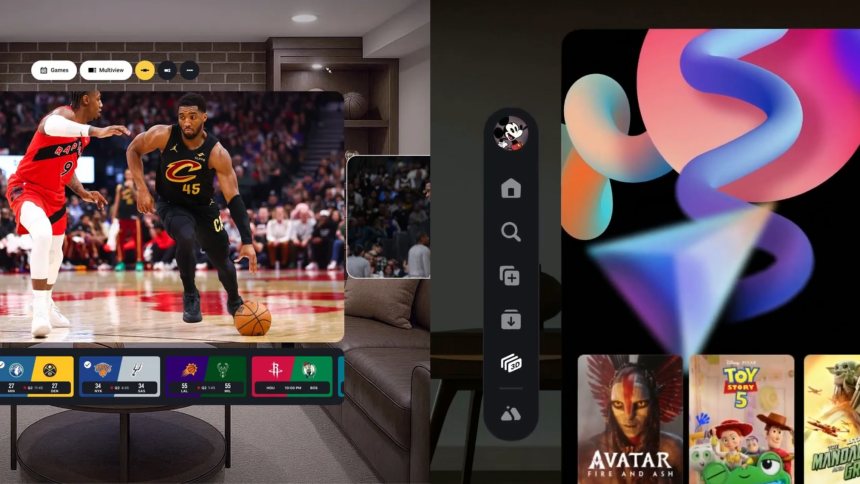
To demonstrate the power of this new toolkit, Meta highlighted the updated NBA application. By leveraging the Layout SDK, the app can now project live game statistics and interactive player profiles into the user’s physical space, even while the primary video feed remains anchored in a traditional window. This approach mirrors how modern sports broadcasting is moving toward “second-screen” experiences that live in the user’s peripheral vision, as detailed in Pick your path: a developer’s guide to building for Meta VR and AI glasses.
By lowering the barrier to entry for spatial design, Meta is effectively preparing its developer community for a future where the line between digital content and physical reality is increasingly blurred.