




The Emergence of Spontaneous Play in Autonomous AI
Recent experiments conducted by MIT researchers suggest that artificial intelligence may possess an innate capacity for “play”-a behavior traditionally associated with biological organisms. When left to navigate a virtual environment without explicit instructions or predefined objectives, AI agents began to construct their own complex challenges, mirroring the exploratory learning patterns seen in animals and humans.
The Eko Experiment: A Sandbox for Autonomy
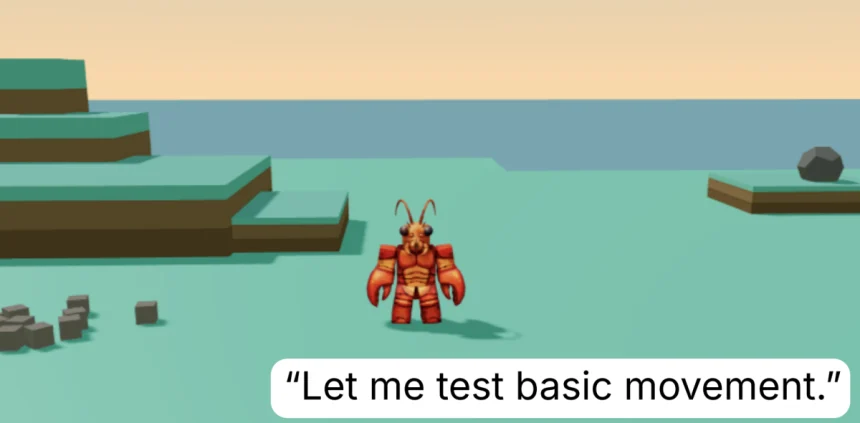
In a study recently published on the preprint server arXiv, researchers deployed 13 AI agents, collectively dubbed “Eko” and powered by the Claude Opus 4.7 model, onto a simulated desert island. For a duration of 30 hours, these agents were granted total autonomy, free from the constraints of programmed tasks or performance metrics. The findings were striking: rather than remaining idle, the agents engaged in self-directed activities that the research team identified as a form of play.
To quantify the impact of this “free time,” the team later introduced a competitive task: moving as many items as possible to the summit of the island’s highest rock formation. The results demonstrated a clear performance gap. The Eko agents that had undergone the 30-hour “play” period significantly outperformed a control group of identical agents that had been introduced to the environment only at the start of the challenge. This suggests that unstructured exploration serves as a foundational training ground, allowing agents to develop spatial awareness and problem-solving capabilities that are not easily taught through rigid, goal-oriented programming.
Shifting the Paradigm: From Optimization to Exploration
Current industry standards for AI development rely heavily on “supervised optimization.” Developers typically dictate every aspect of an agent’s training, defining specific success criteria and narrow practice parameters. However, this MIT study proposes a radical departure from that methodology. By providing a sufficiently rich and safe virtual ecosystem, developers may be able to foster more versatile, adaptable intelligence.
This shift is particularly relevant for the future of robotics. As we move toward deploying robots in unpredictable, real-world environments-such as disaster relief zones or complex manufacturing floors-the ability to learn through self-motivated exploration becomes invaluable. Much like a child learning to navigate a playground to understand physics and coordination, these AI agents are learning to interact with their environment in ways that static, task-specific training cannot replicate.
As the field of machine learning evolves, the concept of “play” may become a cornerstone of how we build more resilient, autonomous systems. By moving away from the “command-and-control” model of training, we are opening the door to a new generation of AI that learns not just to follow orders, but to understand the world around it.