



# The Human Element: Why Robot Dogs Still Need a Helping Hand
The vision of a fully autonomous future often overlooks the physical limitations of current hardware. A recent job posting from the San Francisco-based startup Dimensional highlighted this reality, as the company sought individuals to act as “robot dog walkers.” While the concept sounds futuristic, the role was surprisingly manual, requiring human handlers to navigate these machines through urban environments-and occasionally carry them home.
### The Physical Burden of Modern Robotics
According to reports from The New York Times, the position involved more than just supervision. Because the robots are prone to overheating during extended operation, walkers were expected to be capable of lugging the 33-pound units back to the office. This creates a paradoxical situation: a machine designed to automate tasks currently requires a human to provide a “rescue mission” when its internal cooling systems fail.
### Beyond the Walk: The AI Control Gap
The challenges facing companies like Dimensional extend far beyond simple hardware maintenance. Integrating artificial intelligence into physical bodies remains a significant hurdle. Research from Anthropic’s robotics tests indicates that large language models struggle when tasked with direct motor control. Instead, these models perform more reliably when they act as high-level supervisors for pre-trained controllers.
Even with advanced software, teaching an AI to interact with the physical world is notoriously difficult. As noted in recent studies on handling household objects, the gap between walking across a flat surface and delicately manipulating fragile items remains a massive technical barrier.
### Decoding the “Robot Walker” Strategy
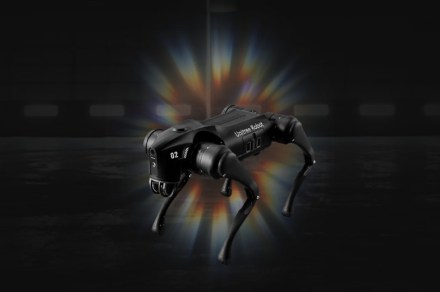
The now-removed job advertisement sought candidates for four to six-hour shifts, requiring no specialized technical background. The machines in question were Unitree robot dogs-popular $2,000 units that can be operated via smartphone apps or remote controls.
So, why pay humans to walk them? The answer lies in data collection. By having humans guide the robots through complex city streets, Dimensional is capturing high-quality navigation data. The robots’ onboard sensors and cameras record these human-led journeys, providing the startup with a roadmap of how to navigate real-world obstacles. In this sense, the “babysitting” is actually a vital training phase, helping the company refine its autonomous navigation systems by observing how humans handle the unexpected variables of a busy sidewalk.