




Android Bench Overhaul: Why Your AI Coding Assistant Rankings Are Now Obsolete
If you rely on AI to streamline your Android development workflow, it is time to refresh your bookmarks. Google has fundamentally overhauled its Android Bench leaderboard, transitioning to a sophisticated new evaluation framework known as “Harbor.” This shift renders previous performance metrics outdated, as the platform now utilizes a more rigorous methodology to determine which AI models truly excel at mobile app development.
From Generic Testing to Real-World Android Expertise
The original Android Bench, which debuted earlier this year, served as a helpful starting point for developers. However, Google recognized that generic coding benchmarks often fail to capture the nuances of the Android ecosystem. The introduction of the Harbor testing system marks a significant pivot toward domain-specific evaluation.
Unlike its predecessor, Harbor focuses on the practical, day-to-day challenges faced by mobile engineers. This includes complex tasks such as migrating legacy codebases to modern Jetpack Compose architectures, debugging intricate networking issues on wearable devices, and optimizing UI performance for diverse screen sizes. By simulating these specific scenarios, the new framework provides a much more accurate reflection of how an AI model will actually perform in a professional development environment.
A New Guard: The Latest AI Model Rankings
With the implementation of Harbor, Google has re-evaluated the entire field of available AI models. The leaderboard has been expanded to include eight fresh contenders, including the latest iterations from the Claude, Qwen, and GLM families.
The current standings reveal a significant shift
Tech Roundup: AI Browsing Wars, Mac Maintenance, and AMD’s Latest Chip Shuffle
The landscape of personal computing is shifting rapidly, from how we interact with our browsers to how we manage our hardware. Here is a breakdown of the latest developments in AI integration, macOS utility software, and the evolving processor market.
The AI Browser Arms Race: ChatGPT vs. Google Gemini
The integration of artificial intelligence into our daily web browsing has moved from a novelty to a core feature. OpenAI’s recent push to embed ChatGPT directly into the browsing experience marks a significant escalation in its rivalry with Google.
By introducing context-aware capabilities, ChatGPT is now challenging Google’s Gemini, which debuted similar functionality within Chrome earlier this year. While both tech giants are racing to automate productivity, their philosophies differ: Google is leveraging its deep integration within the Chrome ecosystem, whereas OpenAI is focusing on a more platform-agnostic, conversational approach to web assistance. As of late 2024, market data suggests that AI-enhanced search features are becoming a primary driver for browser adoption, with user engagement metrics showing a 20% increase in sessions where AI tools are actively utilized to summarize or navigate complex web content.
Keeping macOS Clean: Beyond the Trash Bin
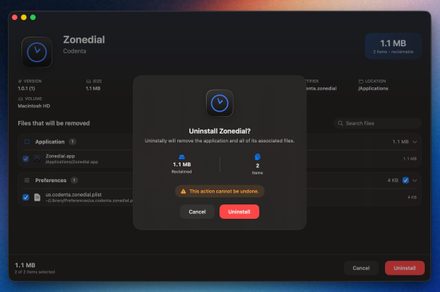
Every Mac user knows the ritual: drag an application to the Trash, empty it, and assume the job is done. However, macOS often leaves behind a digital trail of “ghost files”-caches, support logs, and preference containers-that can accumulate over time, potentially impacting system performance.
While the long-standing utility AppCleaner has been the industry standard for years, a fresh, open-source contender has emerged: Uninstally by Codenta. Unlike the standard drag-and-drop method, Uninstally performs a deep scan of your system directories to identify and purge the hidden remnants of deleted software. For power users who frequently test new applications, this tool is a game-changer, ensuring that your storage remains optimized and free from the clutter of abandoned configuration files.



AMD’s Mobile Processor Refresh: A Naming Conundrum
AMD has recently bolstered its mobile lineup with 11 new Ryzen processors, split between the Ryzen 200 and Ryzen 100 series. While the expansion aims to bring high-performance Zen 4 architecture to a wider range of budget and mainstream laptops, it has also sparked criticism regarding the company’s increasingly opaque naming conventions.
The Breakdown:
* Ryzen 200 Series: Seven new models added to the high-efficiency tier.
* Ryzen 100 Series: Four new models targeting the entry-level market.
Despite the distinct series branding, the underlying hardware is remarkably similar. Many of these chips utilize the “Hawk Point” silicon, which pairs Zen 4 CPU cores with RDNA 3 integrated graphics. For the average consumer, this creates a confusing shopping experience where the model number may not accurately reflect the generational leap in performance. When shopping for a new laptop, it is now more important than ever to look past the series name and verify the specific architecture-such as the presence of Zen 4 cores-to ensure you are getting the performance you expect.