




The New Era of Automotive Power: Xiaomi’s Silicon Ambitions
The metrics of automotive superiority have undergone a radical transformation. Where we once gauged a vehicle’s prestige by the intensity of its turbocharger or the aggressive roar of its exhaust system, the modern automotive arms race has shifted entirely. The battleground has migrated from the mechanical complexity of combustion engines to the precision of semiconductor cleanrooms. In this new landscape, dominance is measured in nanometers and the efficiency of onboard computing power.
Xiaomi, a titan of the consumer electronics industry that successfully pivoted from smartphone dominance to electric vehicle manufacturing, has concluded that relying on third-party, off-the-shelf driving processors is a strategic bottleneck. To maintain a competitive edge, the company is taking its hardware destiny into its own hands.
Introducing the Xring D100: A Leap in Autonomous Computing
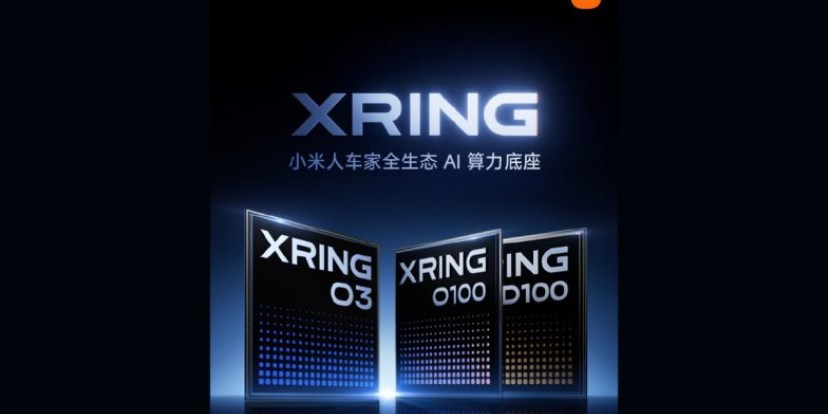
At the heart of this shift is the Xring D100, a groundbreaking development that marks China’s first proprietary smart-driving AI chip. Engineered using an ultra-dense 3-nm manufacturing process, this silicon represents a significant milestone in automotive technology. By moving to a 3-nm node, Xiaomi is prioritizing both thermal efficiency and raw computational density-essential factors for the complex neural networks required for Level 3 and Level 4 autonomous driving.
The company has officially confirmed that the Xring D100 has successfully passed rigorous validation testing. With the development phase complete, Xiaomi is now setting its sights on a commercial rollout, with the chip slated to power its next generation of electric vehicles by 2027.
Technical Prowess Under the Hood
While the exterior of a car captures the eye, the true intelligence of a modern EV lies beneath the dashboard. The Xring D100 is designed to handle the massive data throughput required for real-time sensor fusion, object detection, and predictive pathing. The architecture is anchored by a robust 20-core CPU, providing the necessary overhead to manage complex software stacks without latency. As the industry moves toward software-defined vehicles, having a custom-tailored silicon solution allows Xiaomi to optimize its proprietary algorithms far more effectively than competitors tethered to generic, mass-market hardware.