




The End of the Road: Dreame Halts Ambitious Automotive Ambitions
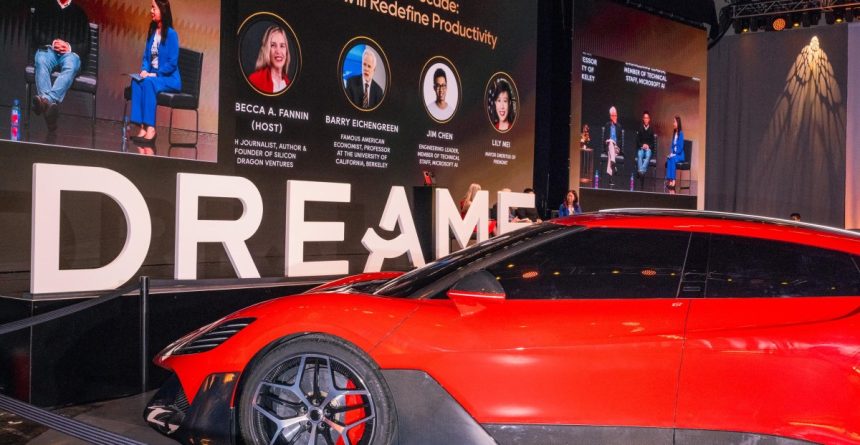
Dreame, the vacuum manufacturer that once set its sights on becoming a titan of global technology, has officially pulled the plug on its electric vehicle (EV) division. This pivot marks a significant retreat for a company that previously aimed to challenge industry giants with high-performance, rocket-boosted automotive concepts.
### From “Project Starry Sky” to Administrative Wind-Down
The initiative, internally dubbed “Project Starry Sky,” was once a massive undertaking. At its peak, the division commanded a workforce of over 1,000 employees, all dedicated to pushing the boundaries of EV performance. However, reports from CarNewsChina indicate that the project has been effectively dismantled. Today, the bustling engineering teams have been replaced by a skeleton crew of legal and human resources personnel tasked with the final stages of liquidation.
In an official statement, the company characterized the move as a strategic recalibration of its “exploratory” ventures. Dreame emphasized that its future roadmap will now prioritize four core pillars: smart home appliances, outdoor and garden technology, smart mobility solutions, and the development of embodied AI.
### Regulatory Pressure and the Funding Crunch
The collapse of the automotive arm is largely attributed to a shift in the financial landscape. Dreame, which rose to prominence as a dominant force in the vacuum market, had aggressively diversified its portfolio, launching nearly 1,000 subsidiaries spanning robotics, mobile technology, and automotive engineering.
Much of this rapid, sprawling growth was fueled by state-backed capital. However, the environment has shifted as the Chinese government implements stricter oversight on the $3.4 trillion private fund sector. With regulators scrutinizing the allocation of state funds more closely, Dreame-a company that aspires to be a global technology giant-found itself under the microscope. The sudden withdrawal of government financial support has rendered its automotive project unsustainable, forcing the company to abandon its high-speed dreams in favor of more stable, proven business models.