



Revolutionizing Logistics: Airbound Secures $37M to Challenge Ground Freight
The landscape of autonomous logistics is shifting as Airbound, an Indian innovator in drone technology, successfully closed a $37 million Series A funding round. This significant capital injection is aimed at a singular, ambitious goal: achieving cost parity between aerial delivery and traditional long-haul trucking.
This latest financial milestone, spearheaded by Greenoaks with strategic backing from industry heavyweights like DoorDash, Lachy Groom, Lightspeed, and Humba Ventures, arrives just months after the company’s $8.65 million seed round. In total, the three-year-old enterprise has now secured approximately $50 million in investment, signaling strong investor confidence in the future of autonomous aerial transport.
Bridging the Efficiency Gap in Drone Delivery
While the promise of drone delivery has long been touted, the industry has struggled to move beyond niche applications. Currently, the logistics sector relies heavily on ground-based vehicles, which offer unmatched versatility and scale. Airbound is positioning itself to disrupt this status quo by fundamentally rethinking aircraft architecture.
The primary hurdle for traditional drone designs is the “dead weight” problem. Conventional aircraft often expend the vast majority of their energy simply keeping their own heavy frames airborne, leaving little efficiency for the actual cargo. This makes the cost-per-delivery prohibitive for smaller, everyday items. According to Naman Pushp, founder and CEO of Airbound, the company’s strategy is to invert this ratio.
Engineering for Payload Supremacy
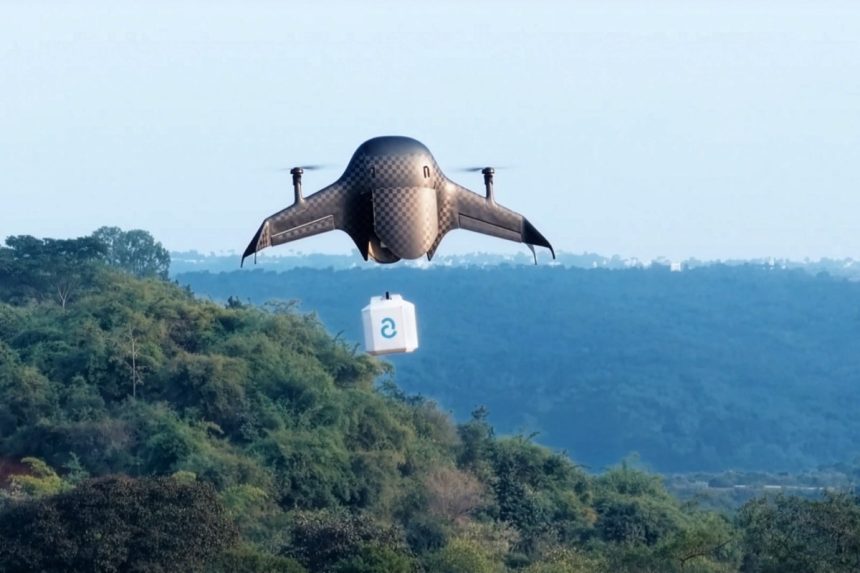
Airbound’s engineering philosophy centers on creating vertical-flight drones that are lighter than the goods they transport. By prioritizing an ultra-lightweight design, the company aims to slash operational costs and energy consumption, making aerial transit a viable competitor to road-based logistics.
The company’s flagship model, the TRT, serves as a testament to this design philosophy. Weighing in at a mere 3.3 pounds, the drone is capable of transporting a 2.2-pound payload. This high payload-to-weight ratio is a critical step toward making drone delivery as ubiquitous as the delivery vans currently clogging urban streets. As the global autonomous last-mile delivery market is projected to reach significant valuations by 2030, Airbound’s focus on weight efficiency could be the catalyst that finally brings drone delivery into the mainstream.